Description
Rose de Berne Apple Tree: Swiss Tradition at Your Fingertips
General Description
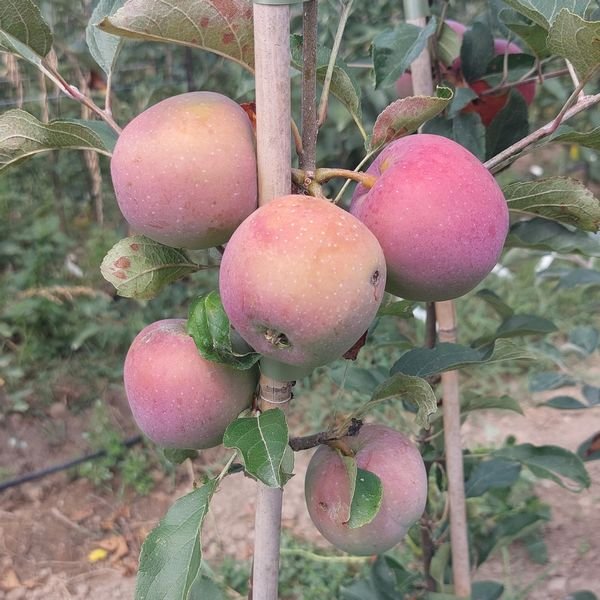
The Bern Rose Apple Tree, also known as Berner Rosenapfel, is an old and hardy variety native to Bern, Switzerland. This apple tree is renowned for its hardiness and ability to grow well at higher altitudes, making it ideal for colder climates and mountainous regions. It is a variety that is both aesthetic and practical, with its fruits of a beautiful dark red, almost crimson color, and a tender, white, slightly pinkish flesh under the skin.
Characteristics of the fruit
Rose de Berne apples are medium-sized, with an intense red skin and juicy, sweet and slightly tart flesh. The taste is well balanced, offering a refreshing experience with subtle aromas typical of this variety. These apples can be eaten both fresh and in culinary preparation, where they bring a beautiful color and a distinctive flavor.
Growing conditions
The Bernese Rose apple tree is a hardy tree, capable of withstanding harsh climatic conditions, especially at altitude. It is not very susceptible to disease, although regular maintenance is recommended to maximize fruit production and quality. This variety blooms in mid-season, usually in April, and it requires good pollination, ideally planted near other varieties such as Cabarette or Colapuis.
Planting and maintenance
When planting, it is important to choose well-drained soil and prepare a hole 50 cm deep. The apple tree should be planted, avoiding burying the graft point, and then watered copiously to ensure a good recovery. It is advisable to keep the area around the trunk weeded to promote healthy growth. Weekly watering is recommended, especially during the first year after planting.
Culinary Use
Rose de Berne apples are versatile in the kitchen. They are perfect to be eaten as is, but they also excel in cooked preparations, such as pies and compotes, where their slightly tart flavor and juicy texture are particularly appreciated.
Storage tips
The fruits of the Rose de Berne apple tree can be stored in a cool, well-ventilated place, such as a cellar, from September to December. Over time, they may lose their firmness, but are still delicious in the kitchen.
Pollination
This apple tree is not self-fertile and will benefit from the proximity of other varieties for better pollination and a more abundant harvest.
my YouTube channel