Description
Plum Tree Plum from Ente Blanche (Ente Jaune)
The Plum Prune d’Ente blanche, also known as Ente Jaune, is a rare and valuable variant of the famous Ente plum family, mainly known for the Agen prune. Originally from Lot-et-Garonne (47) and more precisely from Monflanquin, this variety is distinguished by its yellow-white colour which contrasts with the purplish hue of its classic cousin. This yellow clone retains all the exceptional qualities that have made Agen prunes famous, while bringing a touch of originality and an even more pronounced fragrance that will seduce lovers of authentic flavors.
Characteristics of the White Plum Tree
The Prune d’Ente blanche plum tree develops a vigorous tree with a semi-erect habit, hardy and particularly resistant to variable climatic conditions, withstanding temperatures down to -20°C. Its average flowering, which usually occurs in April, allows it to escape spring frosts that can compromise the harvest of other earlier varieties.
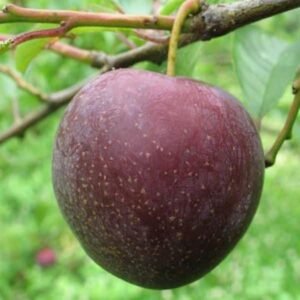
The fruits, with their characteristic elongated shape, are distinguished by their greenish-yellow epidermis punctuated with red when exposed to the sun, covered with a fine whitish plum. The flesh is yellow, crunchy, remarkably juicy and very sweet, offering an even more intense taste experience than the purple variety. These exceptional organoleptic qualities make it a delicious fruit both for fresh consumption and for processing, especially for the making of light prunes, true gastronomic rarities.
Cultivation and maintenance
The White Plum Plum tree is a self-fertile tree, which means that it can produce fruit without the presence of other plum varieties, although cross-pollination can improve the quantity and quality of production. It adapts to most well-drained soils, without excess water and without too much limestone, and prefers sunny situations.
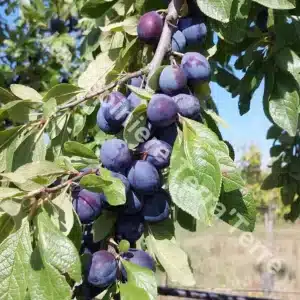
This variety is renowned for its abundant productivity, to the point that the branches often bend under the weight of the fruit. Its cultivation is facilitated by its good natural resistance, although it has a slight susceptibility to rust and monilia, requiring moderate supervision. To obtain optimal results, it is recommended to graft it onto a suitable rootstock such as Myrobolan, which is particularly suitable for heavy soils, or Saint-Julien A for lighter soils.
Culinary Uses
The White Ente Plum is remarkably versatile in the kitchen. Its crunchy and very sweet flesh makes it an excellent table plum for fresh tasting, offering a delicate and fragrant flavor that will seduce the most demanding palates. Its high sugar content makes it particularly suitable for drying for the production of golden prunes, a rare specialty sought after by connoisseurs.
This plum is also perfect for making jams where its strong taste and beautiful color bring a touch of originality. The harvest is generally spread out from mid-August to the end of August, allowing production and various transformations to be spread out. Its crunchy texture makes it particularly pleasant to eat fresh, while its richness in sugar facilitates all culinary transformations.
History and heritage
The white Ente plum belongs to the large family of Ente plums whose history dates back to the Crusades, when these varieties were introduced from the Orient to France. Long cultivated in the traditional orchards of the Lot-et-Garonne, this light-skinned variant is one of the clones which, along with the best-known purple Ente plum, makes up this emblematic family of southwestern France.
By choosing to plant a Prune d’Ente blanche plum tree in your garden, you are participating in the preservation of a lesser-known heirloom variety that is just as valuable as its purple cousin. You also give yourself the opportunity to taste and process exceptional fruits whose taste qualities and versatility will delight all lovers of authentic flavors.
Our other Plum Trees