Description
Nectarine Madame Blanchet
The Nectarine Madame Blanchet is a remarkable old Dutch variety, cultivated for nearly a century for its exceptional qualities. This selection emphasizes hardiness and frost hardiness, with flower buds that can withstand temperatures down to -8°C, making it an ideal strain for cooler regions.
Particularly appreciated for its impressive and ornamental flowering, this vigorous nectarine tree produces clusters of very decorative pink flowers in spring. Its late harvest in September extends the fresh nectarine season, offering juicy, sweet white-fleshed fruits with an attractive orange-red skin.
Although self-fertile, combine it with the Fantasia Nectarine or the Mesembrine Nectarine to optimize pollination and create an orchard with staggered harvests.
Characteristics of the fruit
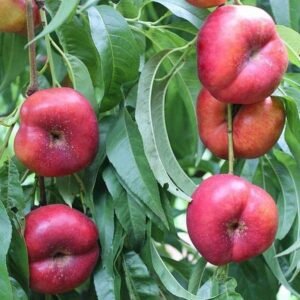
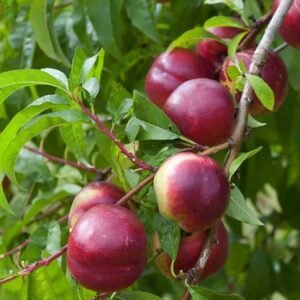
Madame Blanchet nectarines are characterized by their medium size and neat presentation. The smooth, firm skin has an attractive orange-red coloring that contrasts beautifully with the white flesh.
| Feature |
Description |
Quality |
| Flesh |
White, red near the core |
Exceptional |
| Flavour |
Very sweet, juicy, fragrant |
Remarkable |
| Core |
Free (easily detached) |
Practical |
information
The white flesh delicately coloured red around the pit reveals an intensely sweet flavour and a very pronounced fruity fragrance. The pit is easily detached from the pulp, making it easier to eat. This firm and juicy texture perfectly characterizes the best white-fleshed nectarines.
Exceptional hardiness
The Madame Blanchet nectarine is distinguished by its exceptional hardiness, inherited from its Dutch selection. This variety is particularly resistant to winter temperatures down to -15°C and its flower buds can withstand frosts down to -8°C.
❄️ Climate benefits:
- Remarkable winter resistance (-15°C)
- Frost-resistant flower buds (-8°C)
- Late bud break to avoid spring frosts
- Excellent adaptation to temperate climates
This hardiness makes it a preferred choice for the central and northern regions of France. For even harsher climates, check out Amsden Peach, also known for its cold hardiness.
Advantages of Late Harvest
Madame Blanchet Nectarine offers the valuable advantage of a September harvest, greatly extending the fresh nectarine season when most other varieties are finished.
📅 Seasonal benefits:
- Last nectarine of the season
- Abundant harvest at the end of summer
- Popular end-of-season fruit
- Excellent complement to early varieties
To create an orchard with perfectly staggered harvests, combine it with the Nectarine Nectarose (mid-August) and the Red Haven Peach (July) for harvests from July to September.
Cultivation and planting
This vigorous, fast-growing variety adapts remarkably well to a variety of growing conditions. Its strong development makes it a perfect subject for training against a wall or free-form training.
🌱 Planting tips:
- Exposure: full sun, sheltered from the prevailing winds
- Soil: rich, well-drained, without excess limestone
- Planting: autumn or late winter frost-free
- Spacing: 4 to 6 metres (vigorous growth)
Its exceptional vigour allows it to reach 4 to 6 metres at maturity. It can also be grown in large pots with strict pruning for decks and patios.
Care and pruning
The Madame Blanchet Nectarine requires annual pruning to stimulate its fruiting and channel its natural vigour. This pruning is carried out after the harvest, in mid-September.
Like all nectarine trees, it can be susceptible to blistering, although its natural hardiness gives it better resistance. For a preventive approach, take inspiration from the practices used with the Queen of Orchard peach, also known for its resistance to diseases.
🌿 Care instructions:
- Annual pruning after harvest (September)
- Regular watering during the growing season
- Spring fertilization with fruit fertilizer
- Preventive treatment with Bordeaux mixture
Late Culinary Uses
Madame Blanchet nectarines, with their very sweet flavor and juicy texture, excel in many end-of-summer preparations. Their late harvest makes it possible to enjoy desserts with fresh nectarines when the season comes to an end.
🍽️ Recommended Uses:
- Fresh tasting: table fruit, fruit salads
- Late pastries: pies, late summer clafoutis
- Preserves: jams, September compotes
- Desserts: sorbets, coulis, poached fruit
Their firm flesh makes them perfect for preparations that require good hold. To diversify your late harvests, combine them with the Roussanne Royale peach, also late.
Harvesting and storage
The harvest of the Nectarine Madame Blanchet takes place in September, marking the peak of the late nectarine season. The fruits are harvested when they yield slightly under pressure and give off their characteristic sweet fragrance.
📦 Harvesting tips:
- Abundant harvest spread over several weeks
- Perfectly ripe and sweet fruit
- Keeping for a few days in the fridge
- Recommended fast consumption
Its late harvest coincides with the first signs of autumn, offering fresh nectarines that are particularly appreciated in this season when summer fruits are scarce.
Why choose the Madame Blanchet Nectarine?
- 🏛️ Century-old Dutch heirloom variety
- ❄️ Exceptional hardiness (-15°C, buttons at -8°C)
- 🗓️ Unique late harvest extending the season
- 🍯 Remarkable taste quality , very sweet and fragrant
- 🌿 Self-fertile and very vigorous
- 🌸 Impressive ornamental flowering
- 💪 Spring frost resistance
- 📈 Abundant and regular production
Our advice in video
Our other Peach Trees