Description
Chestnut Bouche de Bétizac
The Bouche de Bétizac chestnut is an exceptional hybrid variety developed by INRA in 1962 at the Malemort-sur-Corrèze station. Resulting from a controlled cross between Castanea sativa and Castanea crenata, this chestnut tree has established itself as one of the most cultivated varieties in France alongside Marigoule.
This revolutionary variety produces chestnuts of very large caliber, particularly appreciated for roasted chestnuts and culinary processing. With an exceptional yield of up to 3 tons per hectare, the Bouche de Bétizac is now a reference choice for professional producers and chestnut enthusiasts.
Characteristics of the fruit
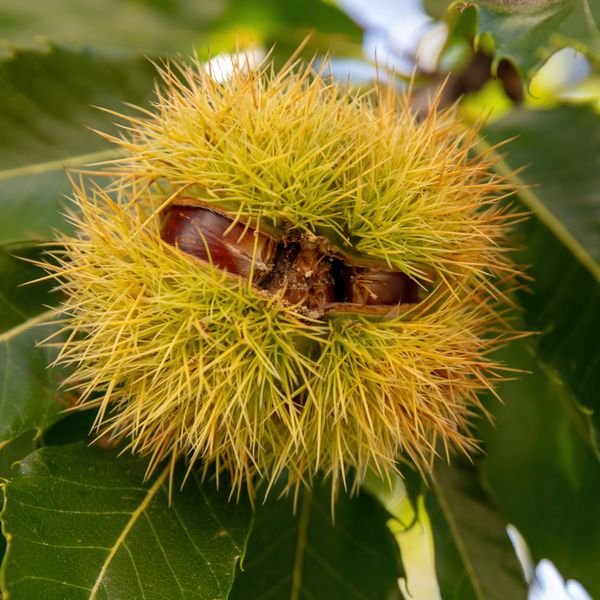
Bouche de Bétizac chestnuts are distinguished by their impressive size and remarkable taste quality. With an average weight of 20 to 25 grams, they have a characteristic elliptical shape with a shiny light red chestnut bark that evolves into a dull dark brown when ripe.
| Feature |
Description |
| Caliber |
Large to very large (20-25g) |
| Shape |
Short elliptical |
| Color |
Light red brown then dark brown |
| Flesh |
Not very partitioned, soft and slightly sweet |
The flesh is characterized by its exceptional ease of peeling, a major asset for fresh consumption and industrial processing. Its delicate, slightly sweet taste makes it a preferred choice for confectionery and refined culinary preparations.
Tree Features
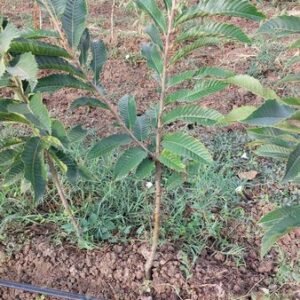
The Bouche de Bétizac chestnut develops an erect and compact habit, particularly suitable for medium-sized gardens. At maturity, it reaches 12 to 15 metres in height with a wingspan of 8 to 12 metres, forming a rounded crown offering excellent summer shade.
Its deciduous foliage consists of large, elongated, serrated leaves that are bright green in spring and summer, turning golden yellow in autumn. The tree has moderate growth but a remarkably fast fruit set, allowing harvests from the third year after planting.
Pollination and fruiting
⚠️ Warning: The Bouche de Bétizac chestnut is an astamine variety that does not produce pollen. It imperatively requires the presence of a pollinating variety to fruit.
Recommended pollinator varieties:
- Belle Épine (longistaminée variety)
- Chestnut from Goujounac
- Chestnut from Chevanceaux
- Maraval (interspecific hybrid)
- Marsol
- Marigoule
Honey flowering occurs in June-July in the form of fragrant yellow catkins, which are very attractive to pollinators. Pollination is mainly carried out by insects, especially beetles, rather than by the wind, contrary to popular belief.
Cultivation and maintenance
The Bouche de Bétizac chestnut thrives in light, deep and well-drained soils, preferably neutral to slightly acidic. He fears soils that are too heavy and very wet, which can promote root diseases.
🌞 Aspect: Full sun to partial shade
🌡️ Hardiness: Very high (-15°C to -20°C)
💧 Watering: Moderate, drought tolerant once established
🗻 Altitude: Up to 400-600 meters
This remarkably disease-resistant tree has excellent tolerance to bark canker and chestnut bark beetle. Its robustness makes it an ideal choice for extensive cultivation with minimal maintenance.
Harvesting and Use
The harvest is spread out from September to October depending on weather conditions. Bouche de Bétizac chestnuts are harvested when the thorny bugs fall and open naturally.
Harvesting tips:
- Harvest daily to prevent drying out
- Testing quality by diving into water: floating fruit is crooked
- Store in a cool place to prolong freshness
Culinary Uses: Excellent for roasted chestnuts, purees, flours, confectionery and preserves. Its ease of peeling makes it a preferred choice for the food industry.
Advantages of this variety
🌰 Outstanding productivity : up to 20 kg per mature shaft
🌰 Impressive size : among the largest chestnuts on the market
🌰 Rapid fruiting : production from the 3rd year
🌰 Natural resistance to major diseases
🌰 Remarkable ease of peeling for processing
The Bouche de Bétizac chestnut tree represents a sustainable investment for any chestnut lover wishing to combine productivity, taste quality and ease of cultivation in his orchard.
Our advice in video
Our other Chestnut trees