Description
Perrotier or Perrots
The Perrotier pear tree, also known as the Poire de la Saint Jean, is a very early old variety that traditionally marks the opening of the pear season. Described for the first time in 1660 by Claude Mollet in Fontainebleau in the Garden of Henri IV, this historic pear represents a true French fruit heritage.
This famous little summer pear is sometimes called “Saint John’s Pear” because it traditionally ripens around June 24th, Saint John’s Day. There are many regional varieties of Perrotier, with each region having developed its own selection of this iconic early pear.
Characteristics of the fruit
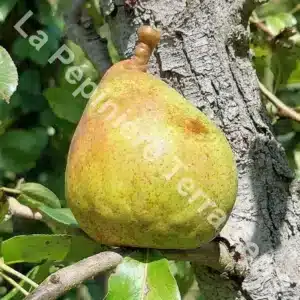
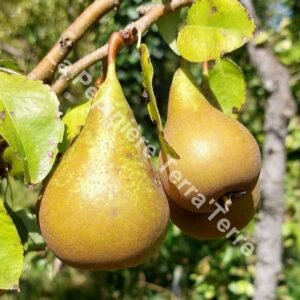
Perrotier pears are distinguished by their characteristic small size (3 to 5 cm long) and their obtuse, pot-bellied pear-shaped, very regular. They feature a distinctive long, arched peduncle that is one of their most recognizable visual signatures.
The skin changes from light green to light yellow when ripe, punctuated by brown lenticels and sometimes tinged with pale pink. The white flesh is semi-fine, remarkably juicy and sweet, with a mild but very pleasant musky fragrance that makes all the charm of this early variety.
| Feature |
Description |
Period |
| 🍐 Size |
Small (3-5 cm) |
– |
| 🎨 Color |
Light Green → Light |
Yellow
Maturity |
| 🌸 Flowering |
Early |
April |
| 🍐 Harvesting |
Very early |
Late June – early July |
| ⚡ Consumption |
Immediate |
After harvest |
Flavour and use
Perrotier Poirier offers a unique taste experience with its tasty, sweet and pleasantly tangy small pears. The well-flavored flesh develops the delicate musky aromas that make the reputation of this summer variety.
🍐 Remarkable specificity : These pears have the reputation of quenching thirst thanks to their very juicy and refreshing flesh. They traditionally mark the arrival of the first pears of the year, bringing an incomparable note of summer freshness.
Recommended Uses
- Plain consumption : Ideal to chew fresh, thirst-quenching
- Table fruit : Perfect for summer snacks
- Cuisine : Excellent cooked in light compotes
- Drying : Promising Trials for Traditional Drying
- Processing : Possibility of quick canning
Cultivation and maintenance
The Perrotier pear tree is a tree of medium vigour that reaches 3 to 4 metres in height at maturity. Hardy and vigorous, it adapts easily to most French regions and has excellent resistance to drought once well established.
This old variety is distinguished by its very good resistance to diseases and its ease of cultivation. Grafted onto a pear tree, it becomes particularly vigorous and resistant, ideal for natural gardens and family orchards.
Cultural requirements
- Exposure : Full sun, sheltered from the wind
- Soil : Any soil, even heavy and moist
- Drainage : Prefers deep soils, not too calcareous
- Resistance : Withstands drought once established
Pollination and associations
Perrotier Pear is not self-fertile and requires the presence of a compatible pollinator. Like most pear trees, it needs another pear tree nearby that blooms at the same time as it.
To optimize pollination, pair it with the Williams pear tree which can pollinate it effectively. Other early-flowering varieties such as Beurré Giffard may also be suitable.
💡 Planting advice : Plant at least two pear trees with compatible flowering to ensure good fruiting of your Perrotiers.
Harvesting and storage
The Perrotier pear tree is harvested from the end of June to the beginning of July, traditionally marking the opening of the pear season. This exceptional precocity makes it the first pear of the year to taste.
⚠️ Be careful with storage : These early fruits do not keep and should be eaten quickly after harvest. It is advisable to pick them a little before they are fully ripe because they become chard and rot very quickly.
Harvesting tips
- Optimal timing : Harvest slightly before full maturity
- Consumption : Immediate after harvest
- Monitoring : Check maturity daily
- Handling : Pick with care, fragile fruit
Varietal diversity
🌍 Regional richness : There are many varieties of Perrotier, each region having developed its own selection. Among the most remarkable is the Perrotier Brézillou from the village of Brézillou in the Aude, known for its characteristic long tail and very early maturity.
Le Perrotier Laguinette offers fruit that is a little larger and juicier than the other varieties, offering an interesting taste diversity for lovers of this traditional pear.
Resistance and hardiness
🛡️ Excellent resistance : Perrotier is particularly hardy and not very susceptible to common pear tree diseases. This natural resistance makes it an ideal choice for ecological gardens and organic orchards.
Its ability to withstand drought once established and its tolerance to heavy, wet soils make it a highly adaptable strain to harsh conditions.
Advantages and qualities
- ⚡ Exceptional earliness : First pear of the year
- 🍐 Authentic taste : Sweet, juicy and fragrant flavour
- 🌡️ Remarkable hardiness : Highly resistant to disease
- 💧 Thirst-quenching effect : Very juicy flesh that quenches thirst
- 🏛️ Historical heritage : Variety described since 1660
- 🌿 Ease of Cultivation : Low Maintenance Required
- 🌍 Regional diversity : Many local varieties
- 🔄 Productivity : Productive tree with very many fruits
Our advice in video
Our other pear trees