Description
Plum Belle de Louvain
The Belle de Louvain plum tree is an old Belgian variety discovered in 1845 in the nursery of Mr. Van Mons in Leuven, where it bore the number 6011. This exceptional plum has established itself as a reference for large purple fruits and its remarkable ability to adapt to cold climates.
Known for its large and regular production, this variety was once present in almost all gardens as it was appreciated for its reliability and quality. It is also an excellent pollinator for other plum varieties.
Characteristics of the fruit
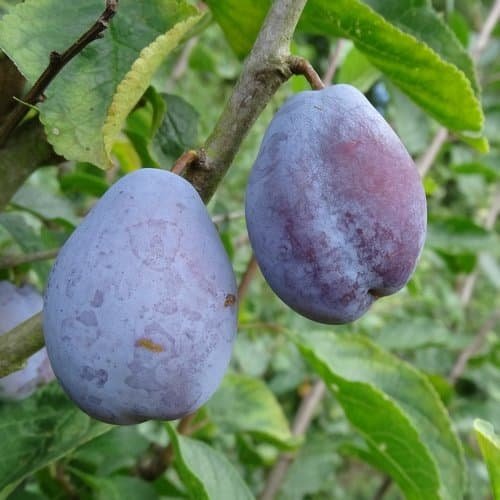
The Belle de Louvain produces very large , elongated oval fruits with a magnificent dark purple purplish skin. These imposing plums reveal a juicy, sweet and fragrant yellowish flesh that adheres to the pit.
The exceptional size of these fruits makes them a variety of choice for those looking for plums with a beautiful presentation. The firm, juicy texture offers a balanced , slightly tart flavour of premium taste.
Culinary Use
This versatile plum excels in many culinary preparations. Excellent for fresh consumption, it is particularly suitable for pastry and jams thanks to its firm flesh that does not fall apart when cooked.
Its balanced taste and texture make it ideal for compotes, marmalades and preserves. Belle de Louvain plums retain their shape and flavor even after cooking, making them a favorite choice of pastry chefs.
Pollination and associations
🌸 The Belle de Louvain is self-fertile but its productivity will be optimised by the presence of other pollinating plum trees. For maximum fruiting, combine it with the Reine Claude d’Oullins plum tree or the Reine Claude de Bavay plum tree.
It itself is an excellent pollinator for many other plum varieties, making it a valuable asset in a diverse orchard.
Flowering and resistance
One of the great advantages of this variety lies in its late flowering (April-May), which allows it to escape spring frosts. This characteristic, combined with its exceptional hardiness (down to -20°C), makes it a variety particularly suitable for cold regions and high-altitude crops.
Its abundant and honey-bearing flowering attracts natural pollinators and ensures good production even in difficult weather conditions.
Cultivation and maintenance
The Belle de Louvain plum tree thrives in full sun in ordinary, well-drained, neutral to slightly calcareous soil. This very hardy variety adapts to all types of soil, even the most ungrateful, as long as it is not too dry.
The tree has a high vigour and naturally forms a spreading habit 4 to 5 metres high. It produces quickly and production quickly becomes abundant and regular.
Remarkable benefits
| Qualities |
Benefits |
Period |
| ❄️ Late |
flowering
Protection against frost |
April-May |
| 🍇 Very large fruits |
Exceptional |
presentation
August |
| 🌿 Disease |
resistance
Easy |
Cultivation
All season |
Planting Tips
Plant your Belle de Louvain plum tree preferably in autumn to promote good rooting. Choose a sunny location that is sheltered from cold winds. This variety tolerates calcareous soils and adapts well to the eastern regions of France.
Thanks to its exceptional hardiness and late flowering, it is an ideal choice for gardens located at high altitudes or in regions with harsh winters. Winter mulch will protect the young plants in the first few years.
Harvesting and storage
The harvest takes place from mid-August to early September when the fruit is easily detached from the tree. Belle de Louvain plums can be kept well for several weeks in the fridge, allowing them to be spread out for consumption and culinary preparations.
This historic Belgian variety will guarantee you generous and regular harvests of exceptional fruit, perfect for decorating your summer table and your gourmet preparations.
Our advice in video
Our other Plum Trees