

And for those who want to know more:
 Nijisseiki
The Nijisseiki, also known as the “pear of the 20th century”, is distinguished by its yellow and sweet flesh. It ripens towards the end of August and is famous for its perfect balance between sweetness and freshness with a slight hint of acidity.
Shinseiki offers a refreshing taste experience with its green-yellow skin and medium-sweet flesh. Maturing around mid-August, it is also appreciated for its role as an effective pollinator. Self-fertile, it is one of the best known in France.
Hosui is known for its juicy flesh and exceptional taste quality. This variety ripens at the beginning of September and can be harvested even until December. Offering a unique juicy texture and taste that appeals to nashi lovers.
The Shinko prefers warm climates, when it is in its element it becomes very productive. It gives excellent round fruits of large size.
Ya Li is a large fruit from a vigorous and productive tree. This variety is characterized by its self-sterility, requiring the presence of other varieties for pollination (the Tsu-li variety to pollinate it).
The Kimizuka Wase is picked up early in the season, in Japanese Wase means “early”. It ripens in August, very pleasant and refreshing to eat under the scorching August sun.
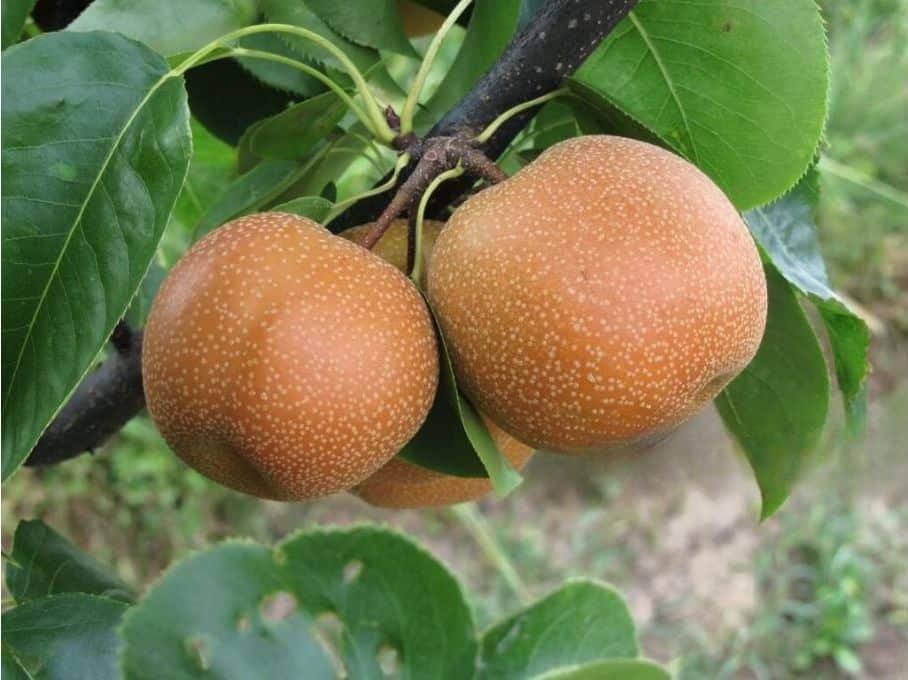
Chojuro ripens from late August to early September, standing out for its golden skin and sweet flesh. This strain is often chosen for its rich flavor and pleasant aroma. It has a round shape and a bronze-colored skin.
Niitaka produces large, very good quality fruits, which ranks it among the best. Soft and subtly sweet, it offers the perfect balance of sweetness and freshness.
The fruits of the Kosui are round and medium to large in size, with a thin, rough skin that is bronze-colored. Their flesh is white, crunchy, juicy and very sweet, with a delicate scent of rose water.
The cultivation of this tree requires special attention to ensure its growth and fruiting. For optimal development, these plants prefer well-drained soil and full sun exposure. Planting is ideally done in late autumn or early winter. Regarding maintenance, regular and appropriate watering is crucial, especially during periods of drought.
In general, this pear tree is not a very complicated crop. It does not suffer from any particular disease and has few pests. This makes Nashi an ideal tree for a beginner (as for the pear tree). It is also generally grafted on Pyrus (=Frankish pear).
Pruning is also an important aspect of maintenance, to be carried out during the dormant season to remove dead or poorly placed branches and to aerate the tree. It is a fruit tree that can be formed in Axis to have a faster fruit setting, to learn more about this training pruning I invite you to read our article “Axis Formation Pruning“.
By following these tips, you can expect a bountiful harvest and excellent quality fruit.
Nashi, with its multiple varieties, offers a rich and diverse taste universe. Very popular in Japan and China, this tree grows very well in our latitudes. From the specific cultivation of each type to their nutritional benefits, the different ways of consuming them and the optimal techniques for picking and storing, it is a fruit that is as delicious as it is beneficial to health. Whether for fruit lovers, gardening enthusiasts, or gourmets in search of new flavors, it brings a unique and exotic touch to the palette of fruits available. Its richness in vitamins, its crunchy texture and its versatility in the kitchen make it an excellent choice for a healthy and tasty diet.
Often referred to as Asian pear, it combines the crunchy, juicy textures with a sweet, refreshing flavor. Its flesh is firmer than that of traditional pears and less grainy. On the palate, Nashi offers a subtle sweetness with light notes of rose and melon, making it popular for its freshness and unique taste that stands out from other fruits.
It thrives in areas with a moderate climate and good sun exposure. For optimal growth, plant it in well-drained, slightly acidic to neutral soil. Be sure to choose a location that receives at least six hours of direct sunlight per day. The Nashi can tolerate low temperatures, but it is best to protect it from late spring frosts that can damage the flowers and reduce fruit production.
A ripe fruit can be recognized by its slight softness under gentle pressure, similar to that of a ripe peach. The color can vary from green to yellow depending on the variety, but a slight yellowing is often a sign of ripeness. In addition, the aroma of the fruit becomes more pronounced as it matures. If the fruit gives off a floral, fruity scent when smelled near the stem, it is probably ready to be eaten.
It is rich in fiber, vitamin C, and potassium, making it a great choice to support a balanced diet. Fiber helps regulate the digestive system, while vitamin C boosts the immune system. Potassium, on the other hand, contributes to cardiovascular health by helping to regulate blood pressure. In addition, with its high water content, it is moisturizing and can help maintain healthy and radiant skin.