Description
All about the Plum tree of Béjonnières
The Plumnier des Béjonnières is an old variety from Anjou (Maine-et-Loire – 49), selected in 1827 by the famous nurseryman André Leroy in Angers. This exceptional plum, now less common but still appreciated by connoisseurs, is distinguished by its remarkable taste qualities and its versatility in the kitchen. Particularly adapted to the hot climates of the south of France, it is an excellent alternative to the mirabelle plum in regions where the latter struggles to flourish.
Characteristics of the Béjonnières Plum Tree
The Béjonnières plum tree develops a tree of good vigour with good branching. Its late flowering, which usually occurs in April, gives it a considerable advantage: better resistance to spring frosts that can compromise the harvest of other varieties with earlier flowering.
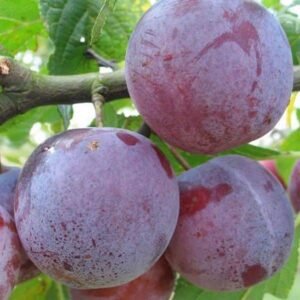
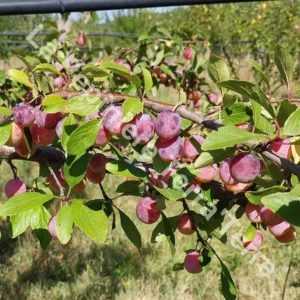
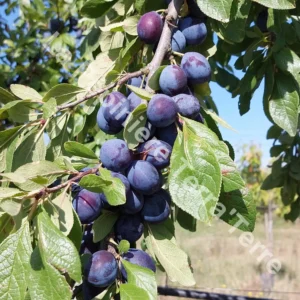
The fruits are medium in size and round in shape. Their skin, a beautiful amber yellow with red spots on the side exposed to the sun, is covered with a slight whitish plum that gives them a velvety appearance. The flesh is firm, juicy and particularly tasty, offering a sweet taste enhanced by a subtle apricot scent that makes all its character. This unique flavor makes it a very popular plum both for fresh consumption and for culinary preparations.
Cultivation and maintenance
The Plum Tree of Béjonnières has the advantage of being self-fertile, which means that it can produce fruit without the presence of other varieties of plum trees. However, cross-pollination can improve the quantity and quality of production. It adapts well to different types of soil and shows good hardiness in the face of variable climatic conditions.
Its late flowering is a major asset in regions prone to spring frosts. In addition, this variety demonstrates good tolerance to common plum tree diseases, which makes it a wise choice for gardens and orchards grown organically or sustainably. To optimize its production, you can combine it with other late-flowering varieties such as the Queen Claude de Bavay Plum Tree.
Culinary Uses
The Béjonnières plum is renowned for its versatility in the kitchen. Its firm and tasty flesh makes it an excellent table fruit for fresh tasting. It also lends itself perfectly to various culinary preparations: jams, preserves, pies and pastries where its delicate apricot scent brings a touch of originality.
Its firm flesh maintains its texture well when cooked, making it an ideal plum for pies and clafoutis. For preserves in syrup, its delicate flavour and beautiful golden colour give a very aesthetic and tasty result.
History and heritage
The result of the selection work of André Leroy, a famous nurseryman from Anjou in the nineteenth century, the Prunier des Béjonnières is a testimony to the rich French fruit heritage. Although less widespread today than some commercial varieties, this plum of character deserves to be rediscovered for its exceptional taste qualities and its good adaptation to modern growing conditions.
By choosing to plant a Béjonnières Plum tree in your garden, you are contributing to the preservation of a historic variety while offering you exceptional fruits whose unique flavor will delight your taste buds and enrich your culinary preparations.
Our other Plum Trees