
30,00 €
Out of stock
More information
Secure payment by credit card.

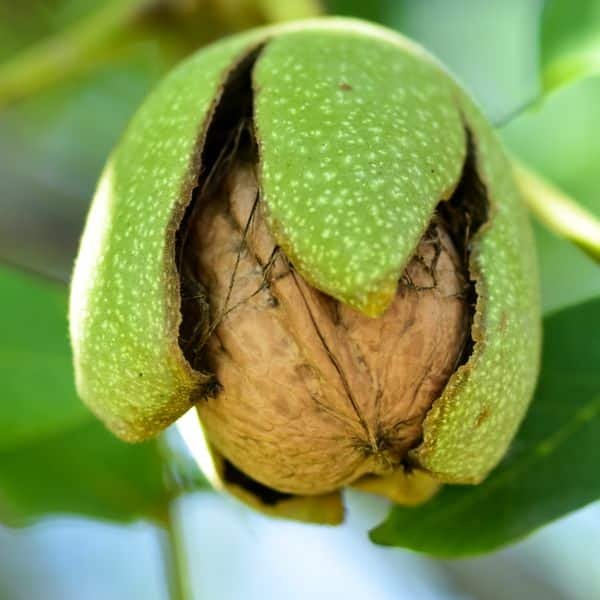
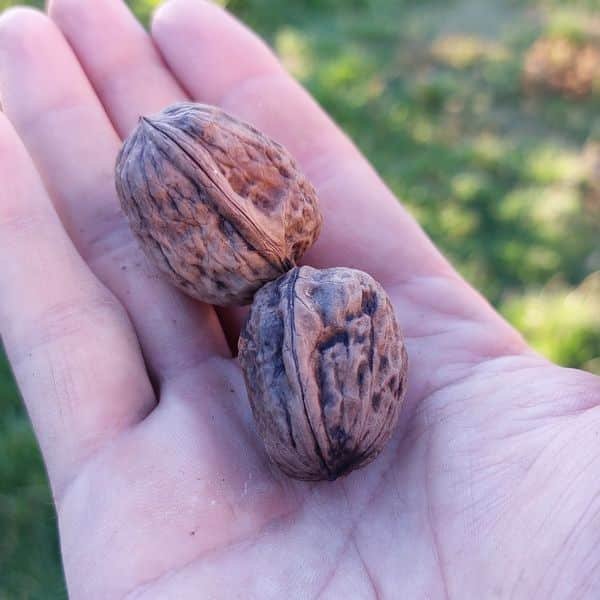
An emblem of tradition and excellence, the Franquette Walnut is anchored in the arboreal history of France. This noble variety, known for enriching the rural economy thanks to its Protected Designation of Origin (PDO), symbolises the country’s fruit heritage and gastronomic richness. The ‘Franquette’ is distinguished by renowned walnuts, prized for their taste and texture, revealing a whole section of French know-how in the field of nut farming. Its cultivation, passed down through the generations, illustrates a part of our agricultural history and actively participates in the local economy of the producing regions, making this variety much more than just a fruit tree, but a true living heritage.
The Franquette Walnut flourishes in a temperate climate, able to withstand late frosts thanks to its late bud break. Exposure to full sun promotes its growth and nut productivity. Be sure to choose an open location, allowing the tree to receive at least 6 hours of direct light per day.
Deep, fertile and well-drained soil is ideal for growing Franquette walnut. The latter tolerates a variety of soils, but prefers nutrient-rich soils with good drainage to prevent root waterlogging. A slightly acidic to neutral soil pH is recommended for optimal growth.
| Step | Approximate | Importance |
|---|---|---|
| Beginning of male | Early May | Introduction of pollen into the environment |
| Female | Mid-May | Allows pollination and nut formation |
This crucial period in the life cycle of the French Walnut requires special attention to pollinators, such as bees, which are essential for the fertilization of female flowers and therefore the production of nuts.
Proper harvesting and storage of ‘Franquette’ nuts is crucial to maintain their taste quality. A good practice is to regularly check stored nuts to remove any that may be damaged or moldy, ensuring maximum longevity and delicious nuts for your culinary preparations.
The Franquette Walnut stands out for a series of advantages and particularities that make it a preferred choice for gardening enthusiasts and professionals. Its exceptional hardiness allows it to withstand cold temperatures, while its self-fertile character facilitates pollination and ensures good nut production, even in the absence of other walnut trees nearby. In addition to its high productivity, the ‘Franquette’ is known for the superior quality of its nuts, which are prized both for fresh consumption and for their use in gastronomy. These traits make the ‘Franquette’ a variety of choices, combining beauty with utility, for any garden.
For more information refer to our planting guide
The Franquette Walnut is distinguished by its robustness, productivity and significant contribution to biodiversity and the local economy. Growing this variety is not only a wise choice for lovers of quality nuts, but also a gesture in favor of the environment. We hope that this guide has provided you with all the information you need to succeed in your Franquette Walnut cultivation. Feel free to share this article to encourage more gardeners to discover the joys and benefits of nuciculture.
For more information, refer to the full source here.
| Weight | 0,33 kg |
|---|
They talk about us
Trustindex vérifie que la source originale de l'avis est Google. Tous les arbres que j’ai reçus et plantés ont bien grandi, et j’ai déjà des mini-pommes cette année ! Très satisfait de la qualité, je recommande vivement. Je repasse d’ailleurs commande cette année sans hésiter!!!Publié surTrustindex vérifie que la source originale de l'avis est Google. Pépiniériste très serviable et réactif,commande livrée rapidement en excellent état. une adresse à recommander.Publié surTrustindex vérifie que la source originale de l'avis est Google. Accueil de qualité et disponibilité, à des prix très raisonnables. Merci pour tous les conseils.Publié surTrustindex vérifie que la source originale de l'avis est Google. Vraiment super. J'ai reçu de beaux arbres, rapidement et bien conditionnés à des prix très corrects. Merci beaucoup pour votre engagement, à l'année prochaine pour de futures commandes.Publié surTrustindex vérifie que la source originale de l'avis est Google. De très bon conseil, Vincent m'a aidé à choisir des variétés de fruitiers adaptés à la région et la terre de mon jardin. Les scions sont d'excellente qualité et les prix très compétitifs. Je recommande+++Publié surTrustindex vérifie que la source originale de l'avis est Google. Mes 4 arbres sont arrivés. Rien à dire sinon parfait de la commande à la livraison. Les petits arbres sont magnifiques. Pépinière à recommander.Publié surTrustindex vérifie que la source originale de l'avis est Google. Super adresse,des fruitiers de qualité sont proposés à des prix très abordables. Le patron,en plus de cela, offre un suivi très rapproché si besoin. Adresse à recommander !!!Publié surTrustindex vérifie que la source originale de l'avis est Google. Des variétés anciennes, peu courantes dans les pépinières. Des scions d'excellentes qualités et des conseils précieux. Vous pouvez y aller les yeux fermés. En tout cas, pour ma part, je vous dis à l'année prochaine!Publié surTrustindex vérifie que la source originale de l'avis est Google. Très pro, à l'écoute, je recommande ! Merci Vincent.
🎉 Perfect!
Your email has been saved.
See you in late August / early September for pre-orders!
Thanks! 🌱