Description
General presentation of the Hazelwood Juningia
The Hazelnut Juningia is a unique variety, offering both a beautiful aesthetic to the tree and delicious hazelnuts. Its growing reputation makes it a prized addition to organic gardens and orchards.
Botanical characteristics of the Hazelnut Juningia
- Tree type : Deciduous shrub
- Mature height : Can reach 4.5 meters
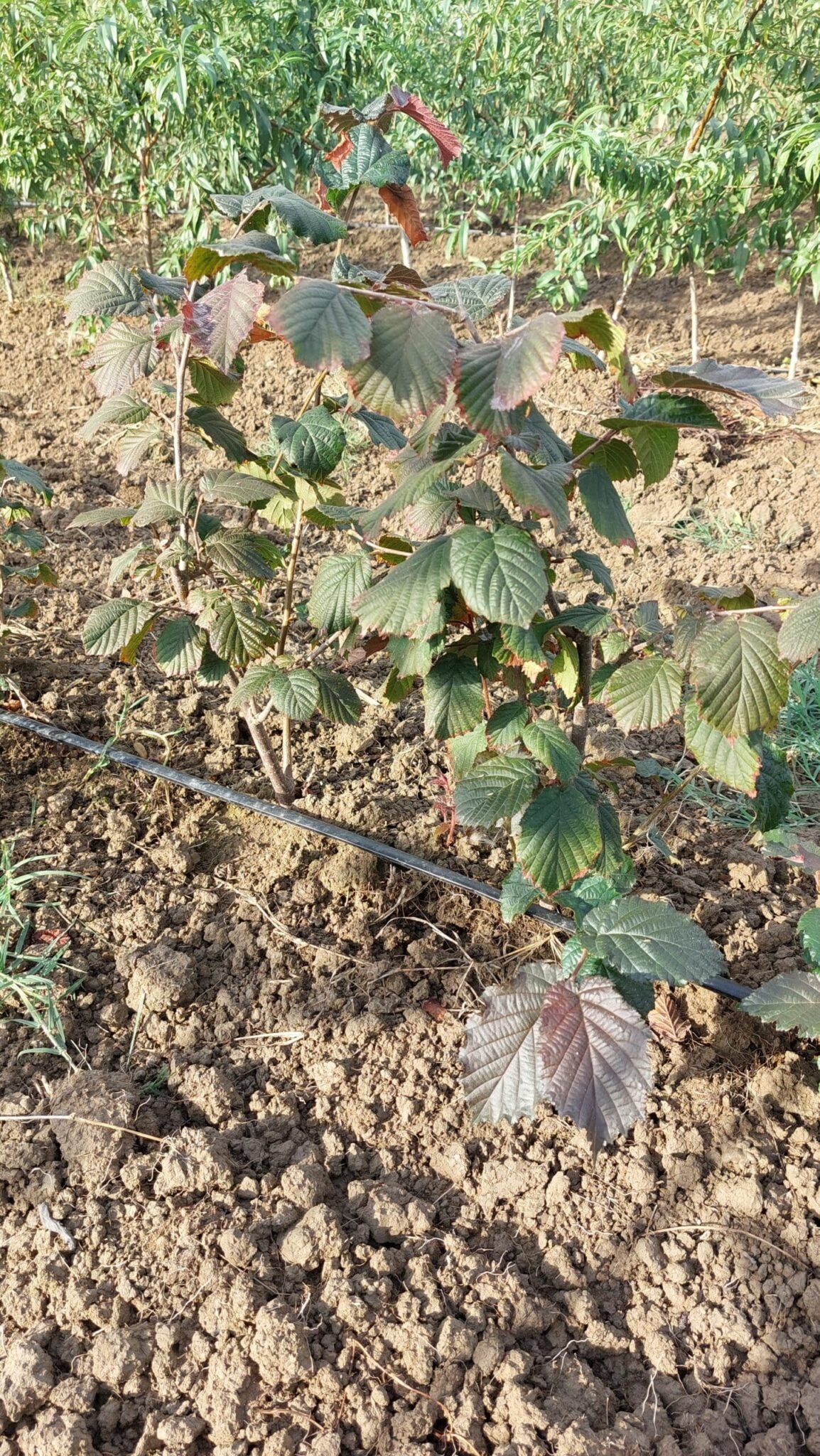
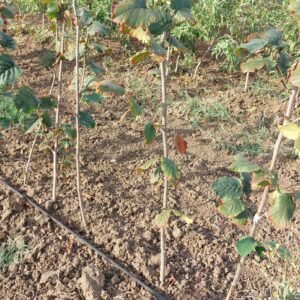
- Foliage : Leaves purple , oval in shape, edged with a slight serration
- Flowering : Purple catkins that emerge in spring
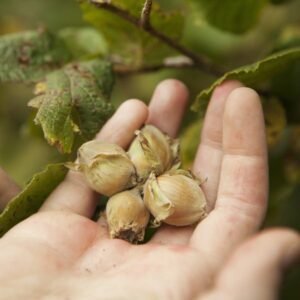
- Fruiting : Medium-sized hazelnuts with a relatively smooth shell
The taste particularities of Juningia hazelnuts
Juningia is known for the exceptional flavour of its hazelnuts:
- Flavour : Rich and slightly buttery
- Texture : A delicate crust with a soft almond inside
- Storage : They keep well, especially if stored in a cool, dry place
Comparison with other hazelnut varieties
When comparing Juningia with other strains:
- Maturity : It offers a slightly later harvest
- Pollination : Excellent pollinator for other varieties
- Resilience : It has a good resistance to common diseases
Culinary and nutritional uses of Juningia hazelnuts
Juningia hazelnuts are not only about their exquisite flavor, they are also a nutritional treasure:
- High in : Antioxidants, fiber, vitamin E and magnesium
- Culinary Uses :
- Perfect for direct snacking
- Enhance sweet dishes such as pies and pancakes
- Incorporated into savory recipes for a crunchy touch
The history and origin of the Hazelwood Juningia
Although less well known than other varieties, the Hazelnut Juningia has a rich history. Native to parts of Europe, it has been selectively bred for its distinct hazelnuts. Today, it is increasingly sought after for its unique properties, making it a rising star in the world of arborists.
Our Advice Blog
Our advice in video
Our other Hazelnut trees