Description
Hedelfinger Cherry
The Hedelfinger cherry, also known as the Hedelfingen Giant, is a historic German variety that was bred around 1850 in Hedelfingen, near Stuttgart. This old and hardy variety has established itself as one of the references in terms of cherries for the northern regions of France and the mid-altitude areas. Its remarkable adaptation to cooler climates makes it a preferred choice for gardeners wishing to grow cherries of exceptional quality.
Renowned for its impressive productivity once established, Hedelfinger produces large-caliber cherries with a deliciously sweet and fragrant flavor. Its late flowering is a major asset, allowing it to escape the spring frosts frequent in the northern regions.
Characteristics of the fruit
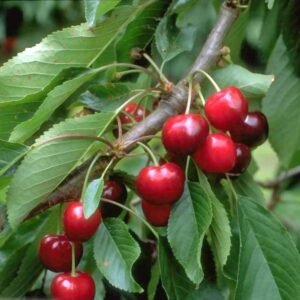
Hedelfinger cherries are distinguished by their elongated conical shape and intense purple-red colour, almost black when fully ripe. The shiny and fairly thick epidermis protects a firm, crunchy and melting red flesh at the same time. The texture is remarkably juicy with a colorful juice that testifies to the richness of the fruit.
The taste is characterized by a dominant sweet sweetness, with a discreet acidity that brings just the right amount of balance. The fine, fragrant flesh offers an exceptional taste experience, which is particularly appreciated when the fruit reaches full maturity. However, a slight bitterness may appear if the harvest is anticipated.
| Feature |
Description |
Quality |
| Size |
Large caliber |
★★★★ ☆ |
| Firmness |
Firm, crunchy |
flesh
★★★★★ |
| Burst |
resistance
Very good hold |
★★★★ ☆ |
Tree Features
The Hedelfinger cherry develops a characteristic semi-erect habit with fairly erect scaffolds and numerous branches. The spindly twigs tend to fall gracefully, giving the mature tree a harmonious dome-like silhouette.
Medium to strong vigour, this tree can reach 4 to 6 meters in height and 2 to 4 meters in width at maturity. Its growth is moderate but regular, with fruiting that requires a few years of patience before reaching its full productivity.
The deciduous foliage, composed of alternate, simple and serrated leaves, displays a beautiful bright green during the vegetative season. In the fall, the tree takes on a beautiful orange-yellow coloring that extends its decorative interest long after harvest.
Flowering and pollination
The flowering of the Hedelfinger cherry tree is one of its main strengths. Occurring late in April, sometimes even at the beginning of May depending on the region, it escapes the destructive spring frosts. The delicate and fragrant white flowers cover the tree abundantly with a spectacular spring coat.
⚠️ Warning: This variety is not self-fertile and requires the presence of other cherry trees to ensure pollination. For optimal fruiting, combine it with Burlat Cherry, Napoleon Cherry, Summit Cherry or Van Cherry.
Conversely, the Hedelfinger itself is an excellent pollinator for most other varieties of cherry cherry trees, making it a wise choice in a diverse orchard.
Cultivation and maintenance
💧 Exposure and soil
The Hedelfinger cherry blossoms fully in sunny exposure, sheltered from cold and prevailing winds. It tolerates calcareous soils remarkably well and adapts to most types of soil, as long as it is light and well-drained.
In soils that are too heavy and wet, be sure to improve drainage to avoid gummy problems. The addition of sand and organic matter can significantly improve soil structure.
🌡️ Hardiness and climate adaptation
Particularly hardy, this cherry tree can withstand temperatures as low as -18°C, or even -20°C depending on the source. Its late flowering gives it an excellent adaptation to the northern regions of France and to mid-mountain areas up to 1000 meters above sea level.
It adapts perfectly to oceanic, continental and even Mediterranean climates at altitude, demonstrating remarkable versatility.
✂️ Pruning and training
Like all cherry trees, the Hedelfinger cherry tree does not tolerate severe pruning which can cause gum runoff. Limit yourself to a soft pruning of training and maintenance:
- Remove dead wood and diseased branches after harvest
- Remove branches that cross each other to promote aeration
- Perform the important prunings in August for better healing
- Maintain a balance between production and vigor
Harvesting and Use
The harvest takes place in mid-July, sometimes a little earlier depending on the weather conditions. Cherries are picked when fully ripe when they display their beautiful intense purple-red colour. Picking should preferably be done in dry weather, keeping the peduncle for better conservation.
🍒 Culinary versatility: Excellent for fresh tasting, Hedelfinger cherries are also ideal for processing. They make delicious jams, tasty clafoutis and can be stored in jars or dried.
Advantages of the Hedelfinger Cherry variety
- Climate adaptability: Perfect for northern France and altitude
- Late flowering: Prevents spring frosts
- High productivity: Generous return once established
- Taste quality: Exceptional flavour and perfect texture
- Hardiness: Remarkable resistance to cold
- Versatility: Excellent pollinator for other varieties
- Storage: Good hold on the tree and after harvest
The Hedelfinger Cherry is a great choice for all cherry lovers who want to grow a reliable, productive and delicious strain. Its ability to adapt to harsh climates makes it a sustainable investment for the family orchard.
Our advice in video
Our other Cherry Trees