Description
Description of the fruit of the Notre Dame Grise pear tree
- Caliber: Medium
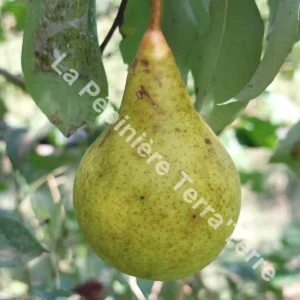
- Shape: Bergamot, tan brown and rough
- Flesh: Brittle, juicy and aromatic with little acidity
- Use: Ideal for candied pears, vinegar or baked pears
Use of the fruit
The pear from the Notre Dame Grise pear tree is mainly used cooked, revealing its rich aromas when preparing candied or vinegar-cooked pears. To be cooked within 10 days of picking.
Tree Description
- Vigour: Strong
- Tree shape: High-stem
- Age: Can reach more than 200 years
Characteristics for cultivation
- Adaptation to the rootstock: High-stem
- Flowering: Median
- Fertility: Good pollinator
- Sensitivity: Not very susceptible to scab, robust against other diseases
Highlights
- Culinary tradition: Perfect for traditional candied pear recipes.
- Durability: Hardy and productive tree, adapted to many climates and soils.
- Heritage: Promotes biodiversity and regional fruit traditions.
The ‘Notre Dame Grise’ pear is an exceptional selection for orchards aiming to grow historic varieties with a rich history and distinctive culinary uses.
Identity of the Notre Dame Grise Pear Tree
- Family: Rosaceae
- Genus: Pyrus
- Species: Pyrus communis
- Ploidy: Diploid
Variety
- Heritage: Yes
- Commercial: No
- Frequency: Common
- Seniority: Very old (before 1900)
- Recommendation: Let’s Set the Scene
Terroir
- Region: Hauts-de-France
- Territories of distribution: Avesnois Regional Nature Park, Maubeuge-Val de Sambre Urban Community, Pays de Cambrésis
Origin
The Notre Dame Grise pear tree is an old and typical variety of Avesnois-Thiérache, widely distributed in Wallonia, particularly in Hainaut. Known for its robustness, it is a legacy of the peasant tradition.
Our advice in video
Our other pear trees