Description
Anna Späth Plum Tree: The Elegance of an Ancestral Plum
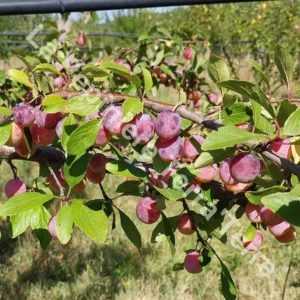
The Anna Späth Plum Tree is an old and hardy variety from Hungary, introduced in 1870 by Mr. Späth in Berlin. This vigorous plum tree is known for its large-sized, ovoid-shaped, slightly elongated fruits with smooth pink-purple skin. The flesh, pale yellow and juicy, is firmly anchored around the pit, offering a natural sweetness and a delicate fragrance that will delight plum lovers.
Characteristics of the fruit
Anna Späth plums are particularly popular for their sweet and fragrant flesh. They are ideal for fresh consumption, but are also perfect for preparing jams, syrups, or baking. Their firm texture and rich juice make them versatile, adding a refined touch to a variety of sweet dishes.
Growing conditions
The Anna Späth plum tree is a hardy tree, capable of withstanding temperatures down to -20°C. It prefers well-drained, rich, and cool soil, and enjoys a sunny exposure. It adapts well to temperate climates, and can even be grown at higher altitudes. This variety is self-fertile, meaning it can produce fruit without requiring another tree nearby, although cross-pollination can improve the quality and quantity of the harvest.
Planting and maintenance
When planting, be sure to choose a sunny location with rich, well-drained soil. The plum tree should be planted in a hole deep enough to accommodate its roots without bending them. Water regularly in the first few years to promote good growth. Annual pruning is recommended to stimulate fruiting and maintain a balanced shape of the tree.
Culinary Use
Anna Späth plums can be eaten fresh as well as in culinary preparations. Their sweet and juicy taste makes them a perfect choice for homemade jams, fruit tarts, or compotes. They are also excellent for making syrups and preserves, where their delicate fragrance is fully revealed.
Storage tips
Anna Späth plums keep well in a cool, dry place, or in the refrigerator. They can be eaten over several weeks after harvest, or processed into jams and preserves to extend their shelf life.
Pollination
Although this variety is self-fertile, it can benefit from the presence of other plum trees to improve pollination and fruit production.
Our other Plum Trees