Description
Plum tree of Ente – Plum tree of Agen
The Prunier d’Ente, also known as Prunier d’Agen, is the emblematic variety used for the production of the famous Agen prune with a Protected Geographical Indication. This historic variety, introduced from the East at the time of the Crusades, was first cultivated by the monks of the Benedictine monastery of Clairac in Lot-et-Garonne.
Vigorous and particularly productive, this plum tree offers an abundant and regular harvest of exceptional plums. Its greenish flesh, juicy and very sweet with a delicate hint of cinnamon, makes it a fruit as delicious eaten fresh as after drying in prunes.
Characteristics of the Ente Plum Tree
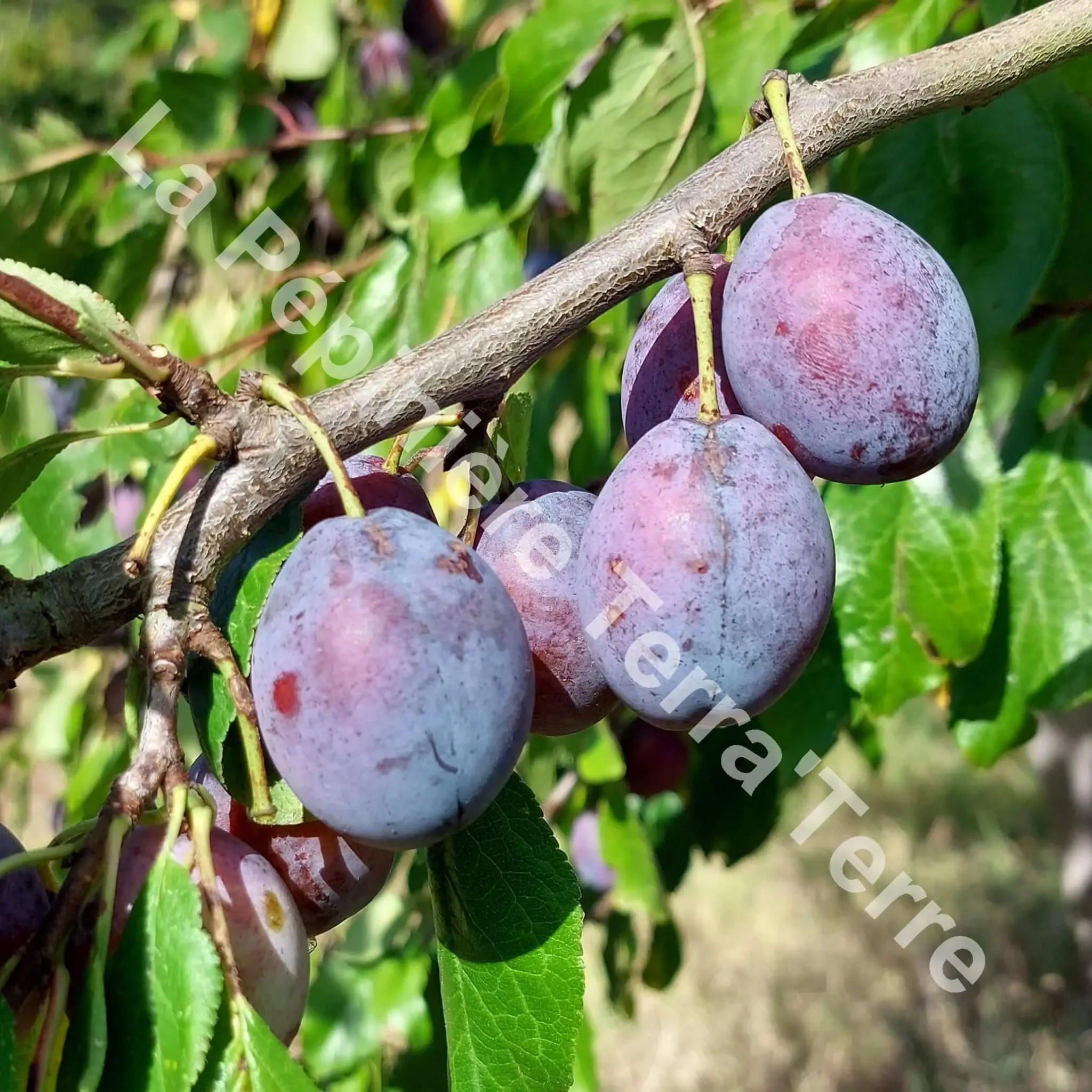
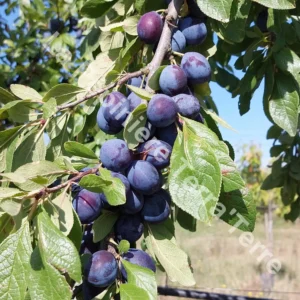
🍇 Distinctive fruit: Ente plums are distinguished by their elongated and ovoid shape, their purplish-red almost black colour, covered with an elegant bluish plum. Their medium to large size (about 70 grams) and thin skin make them particularly popular fruits.
🍯 Exceptional taste qualities: The yellow-green flesh is fine, tender, juicy and remarkably sweet. It is easily detached from the pit and develops unique aromas reminiscent of cinnamon. This richness in natural sugar allows optimal drying for the making of prunes.
🌳 Vigorous tree: The Ente plum tree forms a small tree 4 to 6 metres high, with an erect and flared habit. Its dark brown twigs bear elongated elliptical leaves with crenulated margins. Its vigorous growth gives it excellent productivity.
Flowering and pollination
The late flowering in April is a major advantage of this variety, allowing you to escape spring frosts. The hermaphrodite white flowers form a corolla 27 mm in diameter, composed of 5 slightly separated petals.
The Ente Plum tree is self-fertile, which means that it can bear fruit on its own. However, its productivity is improved by cross-pollination with other plum trees. It is also an excellent pollinator for other plum varieties.
Cultivation and maintenance
🌱 Planting: Plant preferably in autumn or spring, except during periods of frost. Choose a sunny location that is sheltered from cold winds. The Ente plum tree adapts to almost all types of soil, even shallow, relatively dry or calcareous.
🌿 Soil Requirements: Prefer a well-drained, light and fairly rich soil. Avoid land that is too wet, which can promote fungal diseases. A neutral to slightly acidic pH is ideal.
💧 Watering: Water regularly for the first two years after planting. Once established, the tree tolerates drought well but appreciates a water supply in case of prolonged water stress.
🌿 Fertilization: Bring compost in the fall to the foot of the tree. In winter, a light addition of potash-rich wood ash improves fruiting. A slow-decomposing fertilizer promotes the development of the branches.
Size Care
The pruning of the Ente plum tree should be light and limited. It is best to intervene at the end of winter (January-February) to:
- Remove dead wood and diseased branches
- Brighten the crown to improve light penetration
- Remove the oldest branches every 4-5 years
- Harmonize the shape and reduce the dimensions if necessary
Apply a healing putty to large wounds to prevent infection.
Harvesting and storage
The harvest is spread out from the end of August to September, with a gradual maturity allowing several passages. The fruit is ready when it is easily detached from the tree and gives way slightly under finger pressure.
📦 Storage: Fresh plums will keep for up to 2 weeks in the refrigerator. To dry, pick the ripe fruit and let it dry in the sun for 10-12 days or use an oven at 70°C until 22% of the initial weight is obtained.
Resistance and hardiness
The Ente Plum tree has excellent hardiness down to -20°C, making it adaptable to most French regions. It tolerates continental climates well with marked seasons and even adapts to coastal regions.
This variety is naturally resistant to the main plum diseases. The drier summers due to global warming are also limiting moniliosis attacks.
Culinary Uses
Ente plums offer remarkable versatility in the kitchen:
- Fresh consumption: Excellent table fruit with a sweet and fragrant flavour
- Pastry: Pies, clafoutis, crumbles and compotes
- Canned goods: Jams, fruit in syrup and jellies
- Drying: Traditional Agen prunes
- Accompaniments: Meat, game and poultry dishes
Nutritional values
The Ente plum is rich in nutrients : fiber, potassium, iron, vitamins C, B1, B2 and B3. It also contains natural antioxidants. Once dried into prunes, it becomes a nutrient-dense food, known for its beneficial properties on intestinal transit.
Our advice in video
Our other Plum Trees