Description
Pluot Kometa
The Kometa Pluot, also known as the Siberian Plum Kometa, is an exceptional complex interspecific hybrid created in 1987. This remarkable creation is the result of the cross between the Skoroplodnaya and Pionerka varieties, combining four different Prunus species to offer a unique genetic and taste diversity.
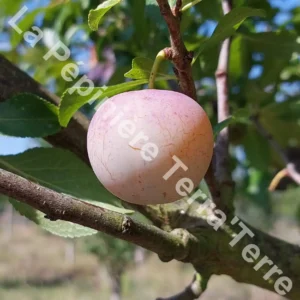
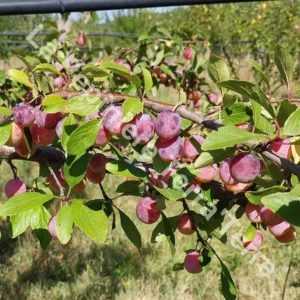
This hybrid fruit of 50 to 60 grams seduces with its extraordinary fragrance which strongly evokes apricot with a more floral note. Its juicy, semi-firm and particularly aromatic flesh offers a rather sweet flavor with a dominant apricot that makes it a real delight for lovers of exceptional fruits.
Origin and Development – Legacy of Luther Burbank
🌍 Complex genealogy: The Pluot Kometa has its roots in the pioneering work of Luther Burbank (1849-1926), the famous American “plant magician” who developed more than 800 varieties of plants. Its variety ‘Climax’, created by crossing Prunus salicina and Prunus simonii, is one of the founding parents of Kometa.
Precise genealogical lineage:
- Skoroplodnaya: Created by crossing Luther Burbank’s ‘Climax’ hybrid plum with the Ussurian ‘Ussuriyskaya Krasnaya’ plum (Prunus ussuriensis)
- Pionerka: Resulting from the cross Prunus cerasifera × Prunus salicina
Characteristics of the Kometa fruit
| Appearance |
Description |
Qualities |
| Shape |
Characteristic
heart-shaped |
Generous size (50-60g) |
| Color |
Yellow with red |
streaks
Very attractive visual appearance |
| Flesh |
Yellow, medium-firm and juicy |
Perfect and aromatic texture |
✨ Exceptional flavour: Kometa is distinguished by its unique fragrance blending apricot aromas with delicate floral notes. Its exceptional taste quality makes it one of the most popular pluots among connoisseurs.
Unique genetic complexity
🧬 Complex interspecific hybrid: Pluot Kometa results from the crossing of four distinct species of Prunus:
- Prunus cerasifera (Myrobolan) – Provides resistance
- Prunus salicina (Japanese Plum) – Contributes to productivity
- Prunus ussuriensis (Siberian plum) – Gives exceptional flower hardiness
- Prunus simonii (Chinese Plum) – Adds unique taste characteristics
This genetic complexity brings a diversity of taste and adaptability that is not found in more traditional fruits, making Kometa a true concentrate of pomological innovation.
Pollination and compatibilities
🌿 Pollination: Pluot Kometa is partially self-fertile, which means that it can produce fruit on its own but its production will be optimized by the presence of compatible pollinators.
Recommended pollinators:
Cultivation and planting of Kometa
🌱 Growing conditions
Pluot Kometa adapts to a wide range of conditions, favouring light, deep and well-drained soils. Its Siberian heritage gives it excellent resistance to cold and harsh conditions.
🌸 Flowering and resistance
Early flowering: Flowering occurs in April-May with delicate white flowers. A remarkable feature: the flowers and young fruits are resistant to light spring frosts thanks to the heritage of the Siberian plum tree.
💪 Exceptional hardiness
The Kometa inherits the extraordinary hardiness of its Siberian ancestors, allowing it to withstand frosts on flowers and to adapt to more northern climates than traditional varieties.
Strength and robustness
🛡️ Remarkable resistance:
- ❄️ Excellent frost resistance on flower
- 🦠 Very good disease resistance
- 🏔️ Suitable for cold climates thanks to Siberian heritage
- 🌿 Resistant to the Plum Pox virus
- 🌧️ Tolerant of wet conditions
Tree Features
🌳 Habit and size: Tree of low to medium vigour, forming a moderately dense oval crown. Its adult size remains reasonable, perfectly suited to family gardens.
Growth and production:
- ⚡ Rapid fruiting
- 📈 Very good performance once established
- 🌿 Healthy and balanced growth
- 🍃 Naturally harmonious habit
Harvesting and storage
📅 Harvest period: The harvest takes place in the first half of July in the north of France, offering early fruits that are very popular at the beginning of summer.
Conservation qualities:
- 📦 Very good natural conservation
- 🚚 Transport-resistant fruit
- 💎 Excellent marketability
- 🏪 Long post-harvest life
- ❌ Burst resistant
Use and tasting
🍴 Versatility of use: Pluot Kometa excels in fresh tasting thanks to its exceptional flavour. It is also perfect for processing into jams, jellies and pastries, retaining its unique aroma when cooked.
🍯 Tasting tips: To fully appreciate the aromatic complexity of Kometa, enjoy it at room temperature after taking it out of the refrigerator 30 minutes before consumption.
Advantages of Pluot Kometa
- ✅ Luther Burbank’s Prestigious Legacy
- ✅ Unique genetic complexity (4 species)
- ✅ Exceptional apricot dominant flavour
- ✅ Remarkable resistance to cold
- ✅ Very good disease resistance
- ✅ Early harvest in July
- ✅ Excellent storage
- ✅ Partially self-fertile
- ✅ Suitable for northern climates
Pomological innovation
🔬 Pluot Kometa represents the culmination of more than a century of innovation in fruit hybridization, from the early work of Luther Burbank to modern selections. This variety is a perfect example of how pomological science can create fruit with exceptional qualities by combining the best of different species.
Our advice in video
Our other Pluots