Description
Pear Lecture
The Conference Pear Tree is an iconic variety created in 1884 in England, which owes its name to the first prize won at the British National Pear Conference in London in 1885. This self-fertile variety has established itself as a world reference for its exceptional productivity and the superior quality of its fruit.
Recognized as a must-have in orchards, this generous pear tree is capable of producing even after a late frost. Its ease of cultivation and resistance make it the preferred choice for beginners and professionals alike.
Characteristics of the fruit
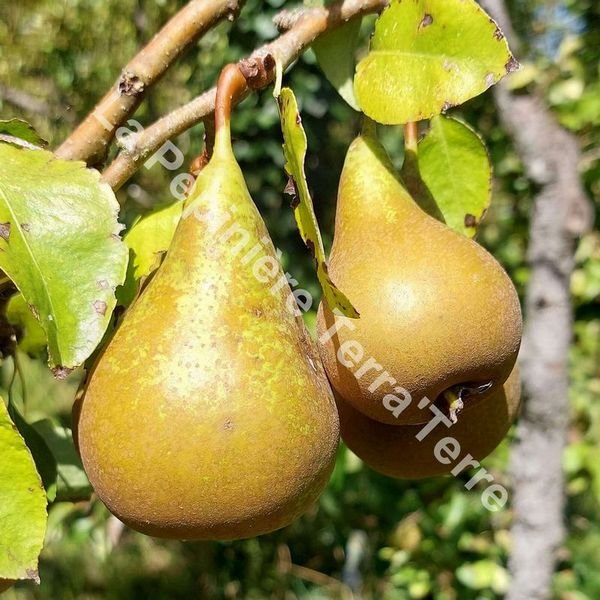
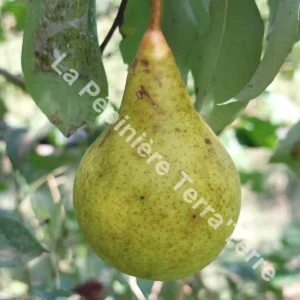
The Conference pear is distinguished by its characteristic elongated teardrop shape, which is easily recognizable. Of medium size, it has a thick skin of green-brown colour marbled with cork, turning pale yellow when ripe with pink reflections on the sunny side.
The white flesh, which turns pale yellow when ripe, offers a fine, melting and exceptionally juicy texture. Its delicate taste reveals a sweet and delicately fragrant flavor, slightly acidic with a perfect balance that makes all its charm.
Tree Features
The Conference pear tree has medium vigour with a compact erect habit. It usually grows to 3 to 4 meters in height, making it perfectly suited for medium-sized gardens. Its moderate growth makes it easy to maintain and harvest.
This variety is remarkably hardy (resistant to -15°C) and adapts to all geographical areas of France. Its mid-late flowering in April makes it possible to avoid late frosts, guaranteeing regular and constant fruiting.
| Unique |
Advantage
Detail |
Benefit |
| 🌟 Self-fertility |
Natural
Parthenocarpy |
Pollinator-free production |
| 🏆 Quality |
Award-winning variety since 1885 |
Global reference |
| 📦 Conservation |
Until January |
Long-term storage |
Pollination and fruiting
The Conference pear tree is one of the only varieties that is truly self-fertile thanks to its parthenoccarpy capacity (development of fruit without fertilization). This allows it to produce on its own, without the need for other pear trees nearby, making it an ideal choice for small gardens.
However, its productivity will be optimized in the presence of pollinators such as the Williams pear tree, the Doyenné du Comice pear tree or the Hardy buttered pear tree. In turn, Conference is itself an excellent pollinator for all other pear varieties.
✨ Unique advantage: It is a fast fruit set with a constant and abundant production from the first years.
Harvesting and storage
🍂 The harvest takes place from mid-September to November depending on the region, about a month after the Williams variety. The harvest is spread over several weeks, allowing for staggered consumption.
Conference pears have an excellent shelf life until January in a refrigerator or a ventilated cellar. This long shelf life makes it a particularly popular variety for winter supply.
💡 Harvesting advice: Pick the pears that are still firm (end of August) and let them ripen gently in the cellar to fully appreciate their fragrant aromas.
Cultivation and maintenance
🌱 The Conference pear tree thrives in sunny exposure in cool, deep, well-drained soil. It prefers non-calcareous soils, enriched and slightly moist without excess.
This variety adapts perfectly to all forms of training : high stem, goblet, glass palmette or espalier. Its moderate vigour makes it easier to train and maintain in trellised forms.
Cultivation requirements
- Soil: Fresh, deep, rich – avoid overly calcareous soils
- Exhibition: Sun, sheltered from strong winds
- Planting: Autumn (October to April) for bare roots
- Drainage: Essential – improve with gravel if heavy soil
- Watering: Regular but beware of sensitivity to dryness
Disease resistance
🛡️ The Conference has excellent resistance:
- Scab: Very resistant on fruit (major asset)
- Hardiness: Excellent resistance to cold (-15°C)
- Late frost: Protective mid-late flowering
- Productivity: Fruiting even after late frost
⚠️ Points of vigilance: Sensitive to drought and wind. Requires regular watering in dry summer.
Culinary Uses
🍯 The Conference pear is versatile and lends itself to multiple culinary uses :
- Fresh tasting (excellent table pear)
- Fine pastries (pies, clafoutis, crumbles)
- Artisanal jams and jellies
- Poached pears in wine or syrup
- Compotes and cooked desserts
- Accompaniment to cheeses (Roquefort, goat’s cheese)
- Preserving and jarring
Its firm texture and balanced flavour make it a pear of choice for all culinary preparations.
Benefits of this iconic strain
✨ The Conference has unique assets that make it THE reference variety :
- Rare self-fertility: Guaranteed pollinator-free production
- Exceptional productivity: Abundant and regular harvests
- Superior Quality: World-award-winning variety
- Long shelf life: Fruits available until January
- Scab resistance: Fewer treatments needed
- Ease of cultivation: Perfect for beginners
- Versatility: All forms of driving
Why choose Conference?
🎯 The Conference pear tree is THE essential choice for several reasons:
For beginners: Its self-fertility and ease of cultivation guarantee success without extensive knowledge.
For small gardens: A single tree is enough to obtain an abundant production.
For gourmets: Taste quality recognized worldwide since 1885.
For productivity: Exceptional yield and consistency of production.
Complementary varieties
Although self-fertile, you can pair Conference with Williams Pear to spread out the harvest period, or Giffard Buttered Pear for early summer pears.
This exceptional variety represents the perfect balance between tradition, quality and modernity. A must-have that will transform your garden into a real productive orchard! 🌟
Our advice in video
Our other pear trees