Description
Pear tree Olivier de Serres
The Olivier de Serres pear tree is a prestigious old variety obtained around 1847 by Mr. Boisbunel, a horticulturist in Rouen, from a seedling of the Fortuné pear of Angers. Described for the first time in 1861, this exceptional pear bears the name of Olivier de Serres (1539-1619), the Ardèche man nicknamed the “Father of French agronomy”.
Awarded a medal by the Horticultural Society of Paris in 1867 and described as a “very good fruit with a long ageing potential“, this variety represents a magnificent tribute to the man who revolutionised French agriculture with his famous “Théâtre d’Agriculture et mesnage des champs”.
Characteristics of the fruit
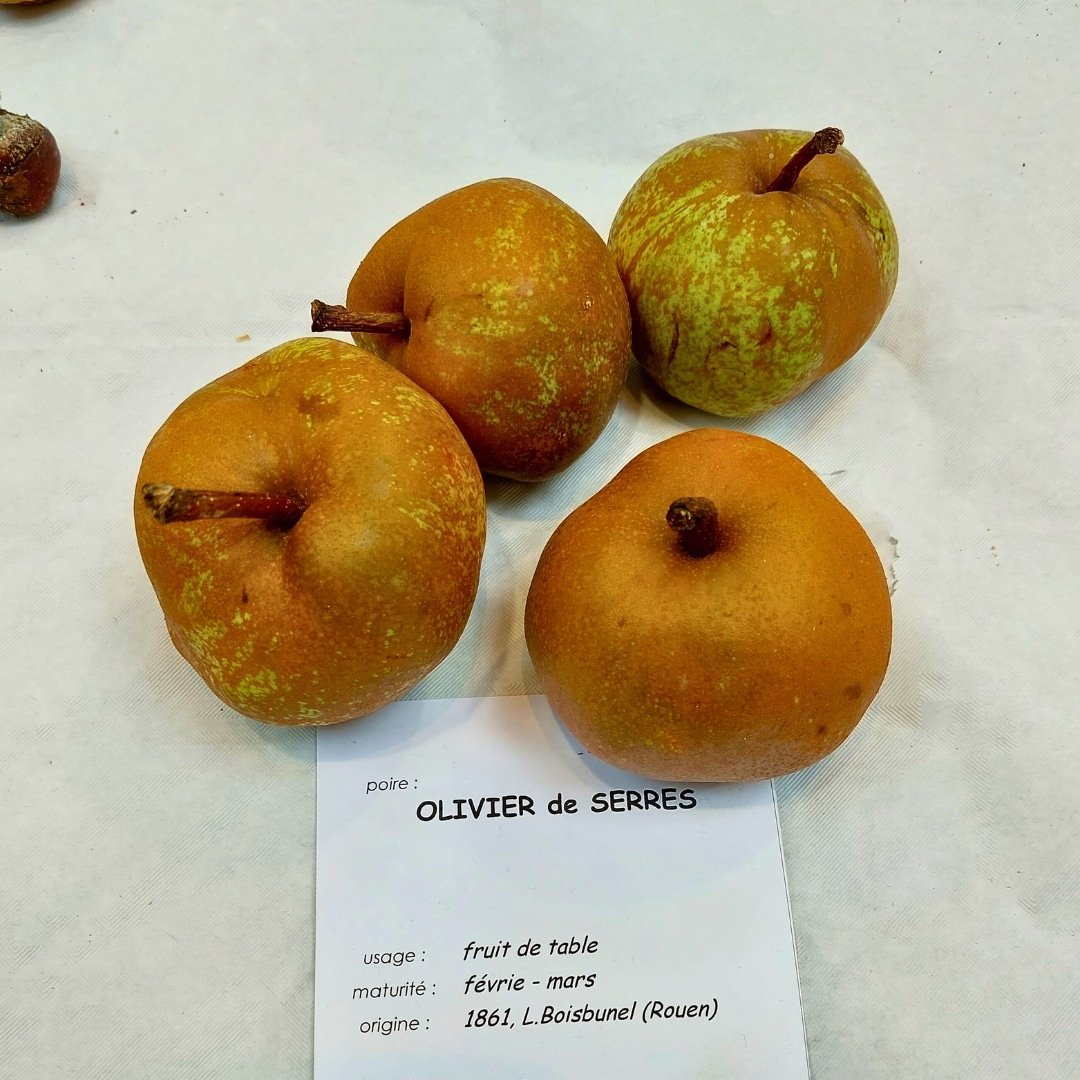
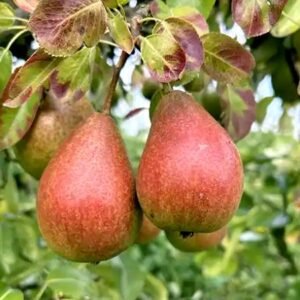
Olivier de Serres pears are distinguished by their characteristic spherical shape, very flattened at the tips, often bumpy on the surface. Medium to large (above average), they look surprisingly similar to apples with their rounded shape.
The fine epidermis has an olive-yellow colour covered with dots and large tawny spots, with a slightly reddish tinge on the sun-exposed side. The whitish flesh is melting or semi-melting, quite fine and remarkably fragrant, sometimes slightly stony around the compartments.
| Feature |
Description |
Period |
| 🍐 Shape |
Spherical, pomiform |
– |
| 🎨 Color |
Olive yellow, tawny |
spots
Maturity |
| 🌸 Flowering |
Medium, abundant |
April |
| 🍐 Harvesting |
Late |
End of October |
| 🍽️ Consumption |
Gradual |
maturity
January to March |
Exceptional taste qualities
Olivier de Serres pear tree produces top quality pears known for their exceptional flavor. The flesh develops sufficient water, very sweet and sour, with a deliciously exceptional fragrance that makes the reputation of this winter variety.
🍐 Taste evolution : This winter pear has a remarkable particularity with its maturity which progresses during the winter. It is essential to wait for the right stage of ripening (December-January) to fully appreciate its exceptional taste qualities.
Recommended Uses
- Table pear : Excellent to enjoy raw at optimal ripeness
- Winter fruit : Ideal for extending the pear season
- Fine dining : Perfect for sophisticated desserts
- Storage : Long-lasting fruit par excellence
Cultivation and maintenance
The Olivier de Serres pear tree is a moderately vigorous tree that develops a fairly erect, branched and stocky habit. It forms beautiful, well-proportioned plants and has perfect vigour once established.
This old variety has a remarkable hardiness (resistant to -15°C) and adapts to all climates up to the middle mountains. However, it requires some special attention to fully express its potential.
Cultural requirements
- Exposure : Warm and well-ventilated exposure (susceptible to scab)
- Soil : Healthy, fairly heavy, rich and deep soil
- Limescale : Avoid excess limescale
- Pruning : Necessary to compensate for its high vigour
Grafting Particularities
✅ Versatility of grafting : The tree does well grafted on quince or franc and lends itself to all shapes, except on stems. This adaptability makes it a versatile choice for different types of gardens.
Pruning is necessary to compensate for its great vigour and optimize fruiting.
Pollination and associations
⚠️ An important particularity : The Olivier de Serres pear tree is a not very fertile variety, although it flowers abundantly. It produces pollen of poor quality, which requires special attention to pollination.
To optimize fruiting, it is essential to associate it with effective pollinators such as the Williams pear tree, the Conference pear tree or the Hardy buttered pear tree.
💡 Expert tip : Louise Bonne d’Avranches and Doyenné du Comice are also excellent pollinators for this variety.
Harvesting and storage
The harvest takes place in October, when the fruits come off easily but are still firm. This winter pear only reveals its qualities after a period of conservation that allows gradual ripening.
📦 Exceptional conservation : A true “long-keeping fruit”, pears keep perfectly and ripen from January to March, offering one of the longest periods of consumption among pears.
Maturation Timeline
- October : Harvest of firm fruit
- December : Beginning of physiological maturity
- January-March : Optimal tasting period
Disease resistance
⚠️ Point of vigilance : The Olivier de Serres pear tree is sensitive to scab, which requires planting in a warm and well-ventilated exposure. This sensitivity can be compensated for by appropriate cultural practices.
Good spacing between trees and aerated pruning limit the risk of developing this disease.
Historical tribute
🏛️ French heritage : This variety pays tribute to Olivier de Serres, born in Villeneuve-de-Berg (Ardèche) in 1539. Author of the “Théâtre d’Agriculture et mesnage des champs” which went through 19 editions from 1600 to 1675, he revolutionized French agriculture with his scientific and experimental methods.
The people of the Ardèche have erected a statue to him in Villeneuve-de-Berg in recognition of his pioneering work.
Advantages and qualities
- 🍐 First-class taste quality : Exceptional fragrance
- 📦 Remarkable conservation : January to March
- 🏛️ Historical prestige : Tribute to the “Father of Agronomy”
- 🍎 Unique shape : Original pomiform appearance
- 🌡️ Good hardiness : Resistant to -15°C
- 🔄 Grafting versatility : Adapts to all shapes
- ⏰ Winter Fruit : Extends pear season
- 🏆 Official recognition : Medalist in 1867
Our advice in video
Our other pear trees