Description
Reinette de France apple tree (Malus domestica ‘Reinette de France’)
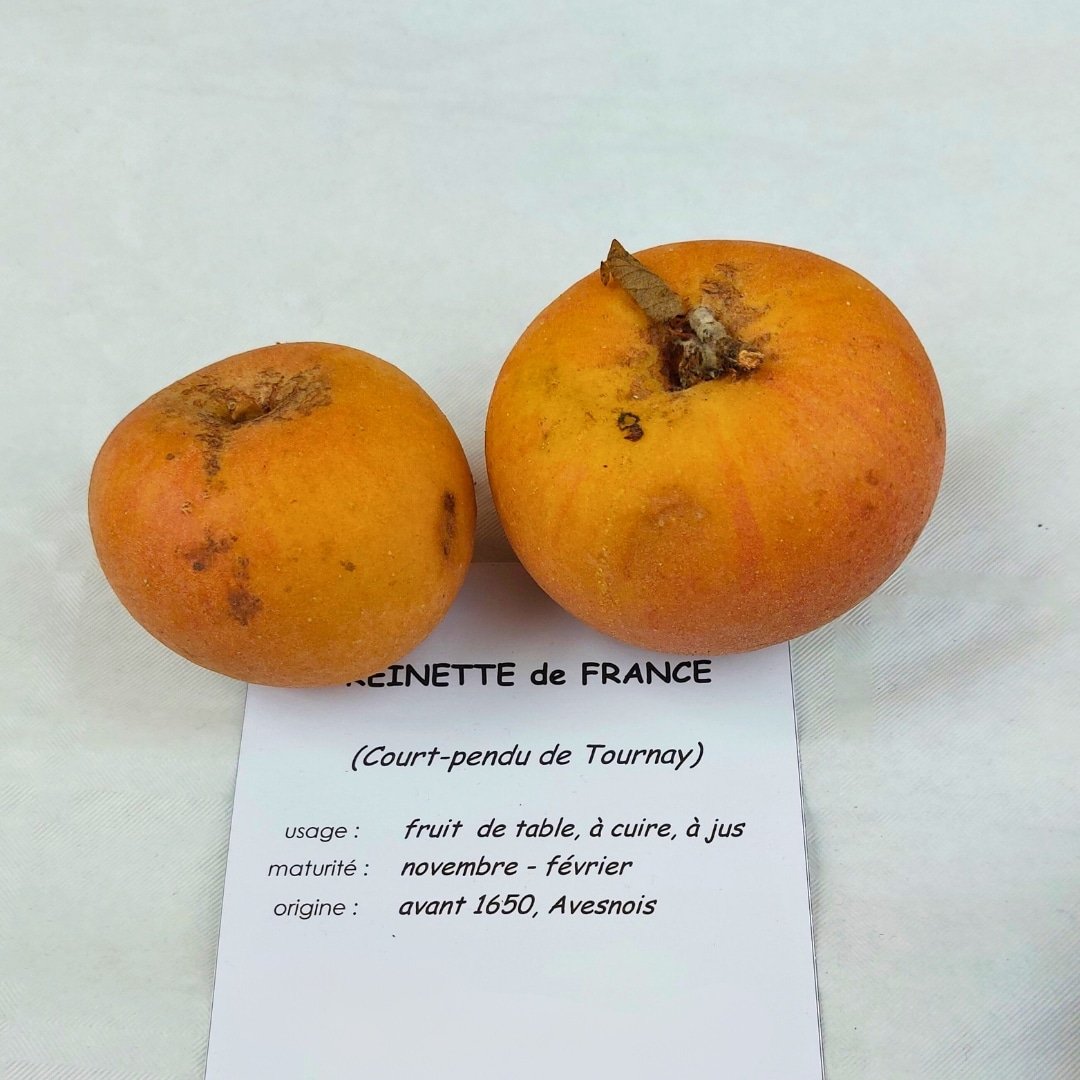
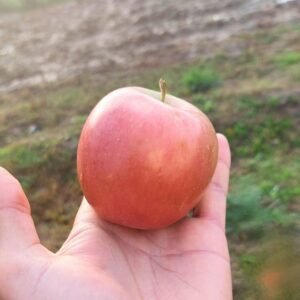
The Reinette de France apple tree is a well-known old variety that is widespread in the meadow-orchards of Avesnois-Thiérache and in Belgium. Also known as Reinette Dorée de France, it is renowned for its excellent taste qualities. It is an all-purpose apple: excellent for crunching, cooking and juicing.
Characteristics of the fruit
- Size: Medium caliber (approx. 70 mm)
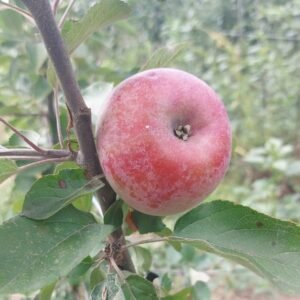
- Colour: Yellow-green washed with orange, covered with a more or less thick cork wash
- Flesh: Fine, crunchy, juicy
- Flavour: Very sweet and tangy, aromatic
- Storage: November to February/March
Culture
Exhibition
The Reinette de France apple tree requires a sunny exposure for optimal fruiting.
Soil
It adapts to different types of soil, but prefers well-drained soils.
Pollination
This variety is self-sterile and requires the presence of other varieties for good pollination. The recommended pollinators are: Belle Fleur Simple, Court Pendu Rouge, Baguette d’Hiver or Reinette Étoilée.
Hardiness
Very hardy, suitable for all regions of France.
Care
Size
Its low vigor allows driving in a central axis. It is suitable for low shapes and trellised shapes. Perform maintenance pruning in late winter to maintain a balanced, airy shape. Check out our guide to pruning fruit trees for more details.
Disease resistance
The Reinette de France apple tree is very resistant to scab, moderately sensitive to powdery mildew. It can be susceptible to canker and fire blight under conditions favorable to these diseases.
Uses
The Reinette de France is a versatile apple. It is excellent for chewing, ideal for baking (pies, compotes), and perfect for juicing. Its fine flesh and good balance of sugar and acidity make it a popular apple for many culinary preparations.
Our planting tips
- Choose a sunny spot in your garden.
- Dig a planting hole three times wider than the root ball of the tree.
- Mix the planting soil with compost or quality potting soil.
- Plant the tree, being careful not to bury the graft point.
- Water thoroughly after planting and install a stake if necessary.
- Mulch the base of the tree to conserve moisture and limit weed competition.
For more information on planting fruit trees, check out our guide to planting fruit trees.
Complementary varieties
To diversify your orchard and ensure good pollination, you can also consider other varieties of apple trees such as:
Also discover our selection of the best varieties of apples to help you in your choice.
Our Advice Blog
Our advice in video