

Table des matières
ToggleTo know everything about Persimmon Varieties
Welcome to La Pépinière Terra’Terre, where we celebrate the diversity of persimmon varieties in organic production. Growing organic persimmons allows you to enjoy delicious fruit while respecting the environment. Learn about the different varieties of persimmons, their unique characteristics, and why they are a great addition to your garden. Join us as we explore the fascinating world of these fruits and enrich your knowledge of this versatile fruit .
Just the essentials:
Two types
- Non-Astringent (hard edible): Fuyu, Suruga, Izu
- Astringents (wait for ripeness): Hachiya, Muscat, Rojo Brillante
Top 5
- Fuyu – Most versatile, hard edible
- Hachiya – For desserts, wait until it is soft
- Rojo Brillante – Excellent sweet after maturation
- Muscat – Large, round, shiny fruits, orange to red in color when ripe.
- Jiro – Non-astringent with a crunchy texture and mild flavor.
Culture
🌞 Full sun 💧 Drained 🌱 soil Planting: autumn/spring ✂️ Pruning: late winter ❄️ Protecting from the cold
Conservation
- Hard → room temperature
- Wall → fridge
- Surplus → freezer
Health
Vitamins A/C/E + Fiber + Antioxidants
To discover all of our fruit trees
And for those who want more information:
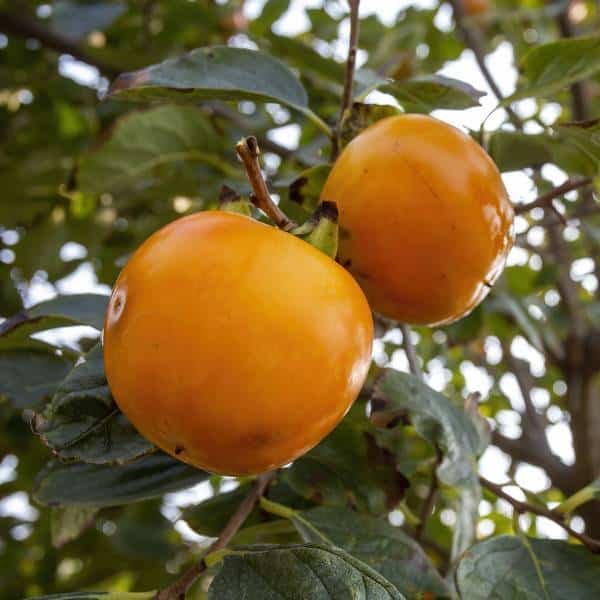
Non-astringent persimmons
Non-astringent persimmons are varieties of persimmons that can be eaten even when they are still firm, without the need for treatment to remove the astringency. Among these varieties, ‘Fuyu’ is the most popular. The persimmon tree of this variety produces orange-red fruits with a soft, crunchy, apple-like flesh. Diospyros ‘Fuyu’ is valued for its mild flavor and disease resistance. These persimmon trees are highly productive, providing an excellent harvest every season. In autumn, the trees are adorned with beautiful flowers that add ornamental value to the garden. Pollination of these trees is often aided by their ability to produce both male and female flowers. The non-astringent diospyros like ‘Fuyu’ does not require treatment to be consumed, making it an ideal fruit tree for home gardeners. These fruit trees are also cold-hardy, making them suitable for various climate regions. Their crunchy skin and juicy flesh make them a perfect choice for fresh consumption.
Some varieties of non-astringent persimmons:
- Fuyu
- Suruga
- Izu
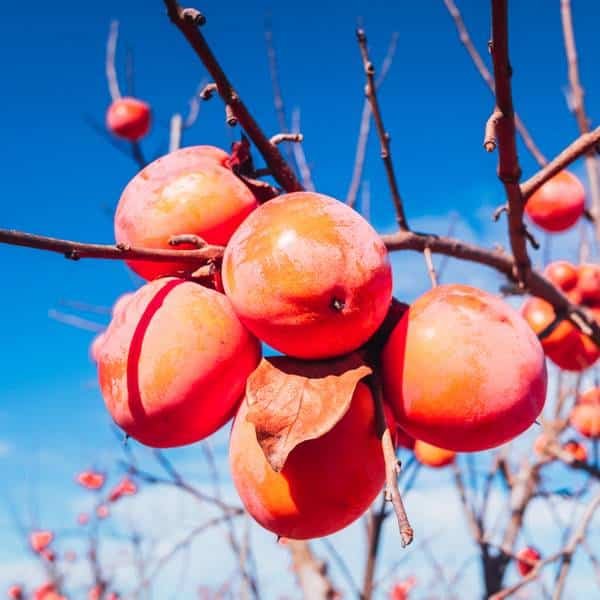
Astringent persimmon
Astringent persimmons, unlike non-astringent varieties, require pre-consumption treatment to remove their natural astringency. The persimmon tree ‘Hachiya’ is a typical example of an astringent persimmon. The fruits of this variety are reddish-orange in color and have an elongated shape. Diospyros ‘Hachiya’ produces very sweet fruits once they have reached maturity and their astringency has been removed, often by drying or freezing. These persimmon trees are also very productive and offer a bountiful harvest each season. In autumn, the flowers of the persimmon tree add a decorative touch to the garden, and pollination of these trees is often necessary to ensure good fruit production. The treatment of the astringency of the ‘Hachiya’ persimmons allows you to enjoy their soft and melting flesh. These fruit trees, although sensitive to cold, offer average resistance and require special care to optimize their yield. Astringent persimmons are often preferred for the preparation of desserts and ready meals due to their rich flavor and melt-in-your-mouth texture after processing
Some varieties of astringent persimmons:
- Hachiya
- Muscat
- Saijo
- Giombo
- Rojo Brillante
The 5 Best Persimmon Varieties
Discover the best varieties of persimmons, selected for their taste qualities and their advantages in cultivation.
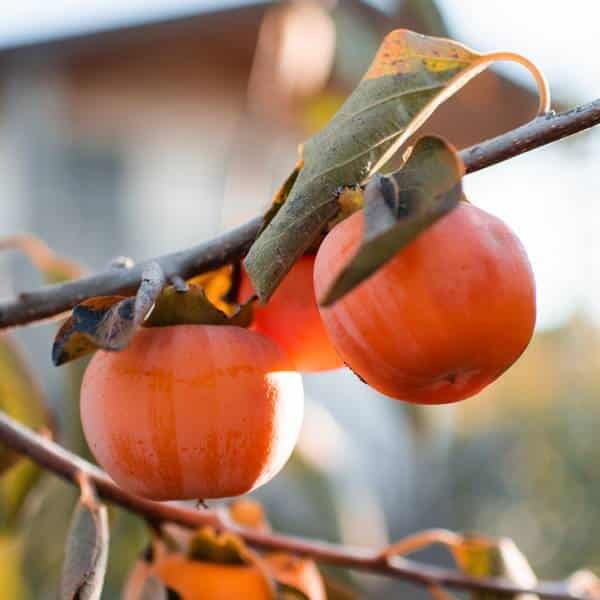
- Fuyu: One of the most popular strains, known for its crunchy, sweet flesh and skin. Learn more. Benefits: Non-astringent, can be eaten fresh. Cons: Sensitive to cold.
- Hachiya : Appreciated for its melting texture and sweet taste when ripe. Advantages: Ideal for desserts. Cons: Requires treatment to remove astringency.
- Rojo Brillante : An astringent persimmon variety that becomes very sweet when ripe. Benefits: Excellent flavor after processing. Cons: Must be treated to remove astringency.
- Muscat: A variety of persimmon tree native to Asia, known for its large, round, shiny fruits, orange to red in color when ripe. Pros: Excellent taste and texture. Cons: Astringent when unripe.
- Jiro : A non-astringent strain with a crunchy texture and a mild flavor. Advantages: Can be eaten fresh. Cons: Less resistant to disease.
Cultivation of persimmon
- Choosing the right location: These trees prefer a location in full sun for better growth. Make sure the soil is well-drained to prevent excess moisture.
- Planting: Plant persimmon saplings in autumn or early spring. Dig a hole twice as wide as the root ball and make sure the graft point is above the ground. For more information, see our planting guide.
- Watering: Water regularly, especially during dry periods. Young trees need more water to establish themselves.
- Size: Prune your trees at the end of winter to remove dead branches and promote good structure. Pruning also improves fruit production. See our section on maintenance or cutting of axle formation for more information
- Interview: Apply mulch around the tree to conserve moisture and reduce weeds. Fertilize moderately to avoid overgrowth of the leaves at the expense of the fruit.
- Protection against the cold: Young trees can be sensitive to cold. Wrap the trunks with protective material during harsh winters.
Harvesting and Storing Persimmons
- Harvest: Persimmons should be harvested when they reach full maturity and their characteristic orange color. The harvest is usually done in autumn. Use pruning shears to cut the fruit with their stalks so as not to damage the tree and the fruit.
- Storage: Persimmons can be stored at room temperature until they are fully ripe. Once ripe, place them in the fridge to extend their shelf life. Astringent varieties can be left to mature until they become very tender before being consumed.
- Preparation for storage: If you have a large quantity, you can also freeze them. Peel and slice the fruit, then place it in freezer bags. They can be used later in recipes like smoothies and compotes.
- Avoiding damage: Persimmons are sensitive to shocks and bruises. Handle them with care during harvesting and storage to avoid any damage that could affect their quality and shelf life.
The Nutritional Benefits of Persimmons
- Rich in vitamins: These fruits are an excellent source of vitamins A, C, and E, which are essential for eye health, the immune system, and protecting cells from oxidative damage.
- High fibre content: The fiber present in this fruit helps improve digestion, regulate intestinal transit and maintain good cholesterol levels.
- Powerful antioxidants: They contain antioxidants such as flavonoids and carotenoids, which help reduce inflammation and protect against certain chronic diseases.
- Low in calories: With their low calorie content, persimmons are a great choice for those who are watching their weight while still enjoying a tasty and nutritious fruit.
- Source of minerals: They provide important minerals like potassium, manganese, and copper, which are essential for muscle function, bone metabolism, and energy production.
Consumption and Uses of Persimmons
- Fees: Persimmons can be eaten as is, by peeling and slicing them. Their sweet and juicy texture is a delight for the taste buds.
- In salads: Add persimmon slices to your salads for a sweet touch and a unique texture. They pair well with ingredients like nuts, goat cheese, and spinach.
- Compote: Prepare a compote by cooking them with a little sugar and cinnamon. Perfect to accompany desserts or to enjoy on its own.
- Smoothies: Blend persimmons with other fruits such as banana and oranges for a vitamin-packed and refreshing smoothie.
- Pies and cakes: Use persimmons in your pie and cake recipes to provide a sweet and fruity flavor. They pair especially well with spices like cinnamon and nutmeg.
A Final Word on Persimmon Varieties
In summary, knowing the different varieties of persimmons and opting for organic persimmons offers many benefits for your health and the environment. Whether it’s for their delicious taste, nutritional benefits, or contribution to an ecological orchard, these trees are a wise choice. Feel free to grow these varieties in your forest garden to enjoy fresh, tasty fruit while supporting sustainable agriculture.