
Vorbestellung geöffnet – Die Baumschule Terra'Terre

The 5 Best Persimmon Varieties: Complete Guide and Growing Tips

The 5 best persimmon varieties (Diospyros kaki)

Everything about persimmon varieties

Welcome to La Pépinière Terra’Terre, where we celebrate the diversity of persimmon varieties in organic production. Growing organic persimmons lets you enjoy delicious fruit while respecting the environment. Discover the different persimmon varieties, their distinctive features, and why they make an excellent addition to your garden. Join us in exploring the fascinating world of these fruits and broaden your knowledge of this versatile fruit.

The essentials:

Two types

  • Non-astringent (can be eaten firm): Fuyu, Suruga, Izu
  • Astringent (wait until fully ripe): Hachiya, Muscat, Rojo Brillante

Top 5

  1. Fuyu – The most versatile, can be eaten firm
  2. Hachiya – For desserts, wait until it is soft
  3. Rojo Brillante – Very sweet once ripened
  4. Muscat – Large, round, glossy fruit, orange to red when ripe.
  5. Jiro – Non-astringent, with a crisp texture and a mild flavour.

Growing

🌞 Full sun 💧 Well-drained soil 🌱 Plant: autumn/spring ✂️ Prune: late winter ❄️ Protect from frost

Storage

  • Firm → room temperature
  • Ripe → fridge
  • Surplus → freezer

Health

Vitamins A/C/E + fibre + antioxidants

Discover all our fruit trees


For those who want to know more:

Non-astringent persimmons

Non-astringent persimmons are varieties that can be eaten while still firm, with no need for any treatment to remove astringency. Among them, ‘Fuyu’ is the most popular. This variety produces orange-red fruit with sweet, crisp, apple-like flesh. Diospyros ‘Fuyu’ is valued for its mild flavour and its disease resistance. These trees are very productive and give an excellent crop every season. In late spring they bear flowers, and in autumn their foliage colours add ornamental value to the garden. Pollination is often helped by their ability to produce both male and female flowers. Since a non-astringent persimmon such as ‘Fuyu’ needs no treatment before eating, it is an ideal fruit tree for home gardeners. These trees are also fairly cold-hardy once established, which makes them suitable for a range of climates. Their crisp skin and juicy flesh make them perfect for eating fresh.

Some non-astringent persimmon varieties:
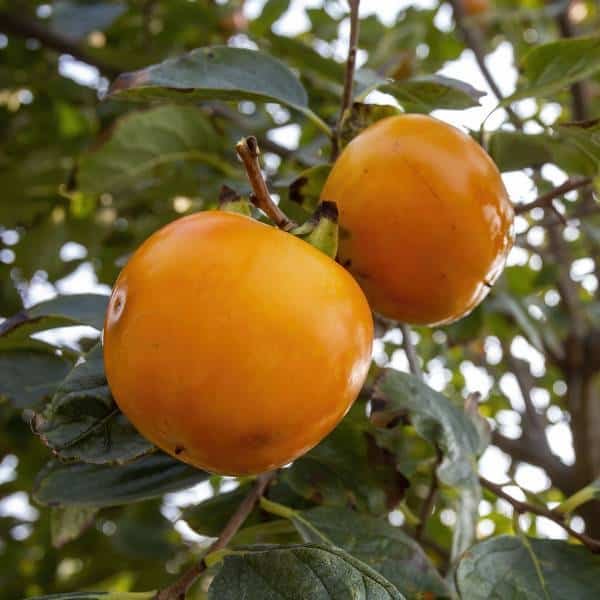
Fuyu persimmon - La Pépinière Terra'Terre

Astringent persimmons

Unlike non-astringent varieties, astringent persimmons must be treated before eating to remove their natural astringency. ‘Hachiya’ is a typical astringent persimmon. Its fruits are red-orange with an elongated shape. Diospyros ‘Hachiya’ produces very sweet fruit once fully ripe and once the astringency has been removed, often by drying or freezing. These trees are also very productive and give a generous crop every season. Their late-spring flowers add a decorative touch to the garden, and pollination is often needed to ensure a good fruit set. Once the astringency has been dealt with, ‘Hachiya’ persimmons have soft, melting flesh. Although these trees are somewhat sensitive to cold, they have average hardiness and need particular care to make the most of their yield. Astringent persimmons are often preferred for desserts and cooked dishes because of their rich flavour and melting texture after treatment.

Some astringent persimmon varieties:
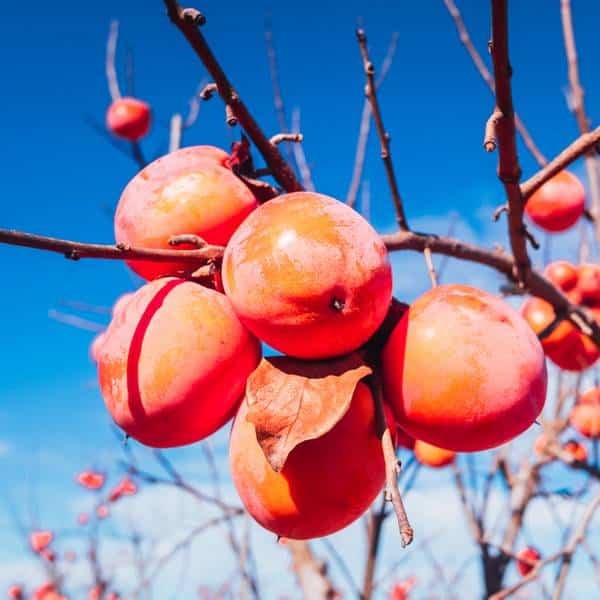
  • Hachiya
  • Muscat
  • Saijo
  • Giombo
  • Rojo Brillante

The 5 Best Persimmon Varieties

Persimmon tree (Diospyros kaki)

Discover the best persimmon varieties, chosen for their eating quality and their advantages in the garden.
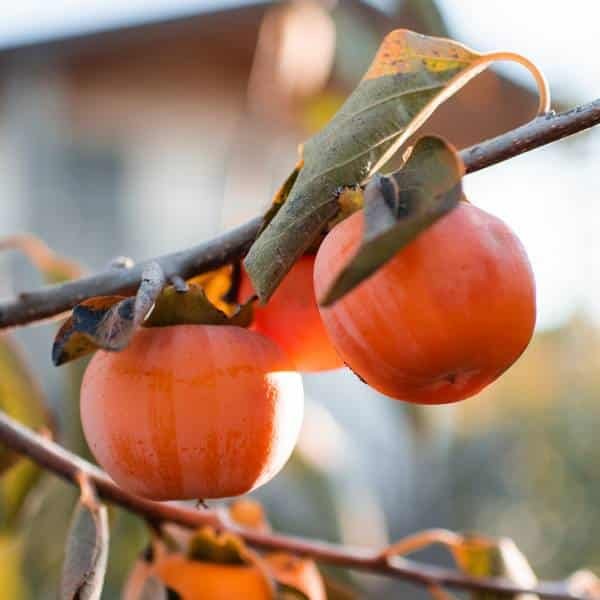
  1. Fuyu: One of the most popular varieties, known for its crisp, sweet flesh and skin. Learn more. Pros: non-astringent, can be eaten fresh. Cons: sensitive to cold.
  2. Hachiya: Prized for its melting texture and sweet taste once ripe. Pros: ideal for desserts. Cons: needs treatment to remove astringency.
  3. Rojo Brillante: An astringent persimmon variety that becomes very sweet once ripe. Pros: excellent flavour after treatment. Cons: must be treated to remove astringency.
  4. Muscat: A persimmon variety from Asia, known for its large, round, glossy fruit, orange to red when ripe. Pros: excellent taste and texture. Cons: astringent until fully ripe.
  5. Jiro: A non-astringent variety with a crisp texture and a mild flavour. Pros: can be eaten fresh. Cons: less disease-resistant.

Growing persimmons

  1. Choose the right spot: These trees prefer full sun for better growth. Make sure the soil is well drained to avoid excess moisture.
  2. Planting: Plant young persimmon trees in autumn or early spring. Dig a hole twice as wide as the root ball and make sure the graft union stays above the soil. For more information, see our planting guide.
  3. Watering: Water regularly, especially in dry spells. Young trees need more water to establish well.
  4. Pruning: Prune your trees at the end of winter to remove dead wood and encourage a sound framework. Pruning also improves fruit production. See our articles on tree care or central leader training for more information.
  5. Care: Spread mulch around the tree to retain moisture and keep weeds down. Fertilise moderately to avoid excessive leaf growth at the expense of fruit.
  6. Frost protection: Young trees can be sensitive to cold. Wrap the trunks in a protective material during harsh winters.

Harvesting and storing persimmons

  • Harvest: Pick persimmons when they are fully mature and have reached their characteristic orange colour, usually in autumn. Use secateurs to cut the fruit with its stalk so as not to damage the tree or the fruit.
  • Storage: Persimmons can be kept at room temperature until fully ripe. Once ripe, put them in the fridge to make them last longer. Astringent varieties can be left to ripen until they are very soft before eating.
  • Preparing for storage: If you have a large crop, you can also freeze them. Peel and slice the fruit, then put it in freezer bags. Use it later in recipes such as smoothies and compotes.
  • Avoiding damage: Persimmons bruise easily. Handle them gently when picking and storing to avoid damage that could affect their quality and shelf life.

Fuyu persimmon

The nutritional benefits of persimmons

  • Rich in vitamins: These fruits are an excellent source of vitamins A, C and E, which are essential for eye health, the immune system and protecting cells against oxidative damage.
  • High in fibre: The fibre in this fruit helps improve digestion, regulate bowel movements and maintain healthy cholesterol levels.
  • Powerful antioxidants: They contain antioxidants such as flavonoids and carotenoids, which help reduce inflammation and protect against some chronic diseases.
  • Low in calories: With their low calorie content, persimmons are a great choice for anyone watching their weight who still wants a tasty, nutritious fruit.
  • Source of minerals: They provide important minerals such as potassium, manganese and copper, which are essential for muscle function, bone metabolism and energy production.

Eating and using persimmons

  • Fresh: Persimmons can be eaten as they are, peeled and sliced. Their sweet, juicy texture is a treat.
  • In salads: Add persimmon slices to your salads for a touch of sweetness and an unusual texture. They go well with walnuts, goat’s cheese and spinach.
  • Compote: Make a compote by cooking them with a little sugar and cinnamon. Perfect with desserts or on its own.
  • Smoothies: Blend persimmons with other fruit such as banana and orange for a refreshing, vitamin-rich smoothie.
  • Tarts and cakes: Use persimmons in your tart and cake recipes for a sweet, fruity flavour. They go particularly well with spices such as cinnamon and nutmeg.

A final word on persimmon varieties

In short, knowing the different persimmon varieties and choosing organic persimmons brings many benefits for your health and the environment. Whether for their delicious taste, their nutritional value or their contribution to an ecological orchard, these trees are a wise choice. Why not grow these varieties in your forest garden and enjoy fresh, tasty fruit while supporting sustainable agriculture?

Facebook
WhatsApp
Email
Print
Picture of Vincent

Vincent

Leave a Reply

Your email address will not be published. Required fields are marked *

🎉 Perfect!

Your email has been saved. We'll let you know as soon as the next pre-orders open.

Thank you! 🌱

Terra'Terre

Log In