
Table des matières
ToggleComplete Guide to Plum Varieties: From Growing to Harvesting
Last updated: October 26, 2024
Reading time: 15 minutes
Plums, these jewels of the orchard, represent a fruit heritage of exceptional richness. As nurserymen specialising in organic farming, we see every year the growing popularity of these delicious fruits and their ancestral varieties.
Discover our selection of the best plum tree varieties in organic farming:
- The ‘Reine Claude d’Oullins’ plum tree: early and self-fertile
- The ‘Datil’ Plum Tree: resistant and versatile
- The ‘Reine Claude Dorée’ or ‘Reine Claude Verte’ plum tree: the taste reference
- The ‘Mirabelle plum of Nancy’: tradition and hardiness
- The ‘Quetsche d’Alsace’ plum tree: ideal for pies
- The ‘Golden Japan’ Plum Tree: exotic flavour
- The Stanley Plum Tree: productive and regular
- The ‘Reine Claude de Bavay’ Plum Tree: late and tasty
Just the essentials about the varieties of Organic Plums
Top 5 Varieties and Uses
- Datil : Versatil, ★★★★★ resistant
- Reine-Claude Dorée : Best for dessert
- Nancy Mirabelle plum : Perfect pies/jams
- Italian plum: Ideal prunes
- Stanley : Easy to grow, productive
Main Families
🟡 Reine-Claudes : Sweet (July-August)
🟨 Mirabelle plums : Small, golden (August-Sept)
🟣 Plums : Elongated (late Aug-Oct)
🔵 Table : Big, juicy (July-Sept)
Organic farming in a nutshell:
🌱 Planting: Nov-March 🌞 Spacing: 4-5m ✂️ Pruning: winter 💧 Watering: first 3 years
Conservation
- Fresh: 2-3 weeks (4-6°C)
- Freezing possible
- Jam/drying for surplus
Benefits
46 kcal/100g + fiber + vitamin C
To discover all of our plum trees
For those who want to know more:
Key figures of organic plums
- More than 40 varieties grown in France
- 2 to 3 times more polyphenols than conventional plums
- Can be stored for up to 4 weeks under optimal conditions
- Harvest staggered from July to October
The Prunus domestica, commonly known as the plum tree, flourishes particularly well in France, offering a remarkable diversity of fruits. From the famous golden Reine-Claude to the authentic Datil Plum, each variety has its unique characteristics in terms of taste, texture and use.
Average nutritional values of organic plums
| Nutrient | Per 100g | Benefits |
|---|---|---|
| Calories | 46 kcal | Ideal for a balanced diet |
| Fiber | 1.4g | Promotes digestion |
| Vitamin C | 9.5mg | Strengthens the immune system |
The Different Varieties of Plums: A Complete Guide to Flavors
The diversity of organic plums offers an array of extraordinary flavors, textures, and uses. In our collection of organic plum trees, we carefully cultivate each variety to preserve their unique characteristics.
The Four Great Families of Plums
The Greek Queens
Jewels of our orchards, the Reine-Claudes are distinguished by their sweet and fragrant flesh.
- Harvest period: Mid-July to the end
- of August Average size: 4-5 cm
- Shelf life: 2-3 weeks
- Use: Dessert, jam, pastry
Our recommended varieties:
- Reine-Claude Dorée – The sweetest
- Reine-Claude d’Oullins – Excellent pollinator
- Reine-Claude de Bavay – Late harvest
Mirabelle plums
Little golden wonders, mirabelle plums are known for their concentration of sugar and their delicate fragrance.
- Harvest period: August to September
- Medium size: 2-3 cm
- Shelf life: 1-2 weeks
- Use: Pie, brandy, jam
Our organic selection:
- Mirabelle plum from Nancy – The reference
Plums
Recognizable by their elongated shape, plums are ideal for baking and drying.
- Harvest period: End of August to October
- Average size: 4-6 cm
- Storage: 3-4 weeks
- Use: Pie, prune, jam
Our selected varieties:
- Alsace plum – The traditional
- Stanley – Excellent for prunes
Table Plums
Larger and juicy, these varieties are perfect for fresh tasting.
- Harvest period: July to September
- Average size: 5-7 cm
- Shelf life: 1-3 weeks
- Use: Dessert, compote
Our best varieties:
- Datil Plum – Our favorite
- Golden Japan – Exotic flavor
The 10 Best Organic Plum Varieties
Through our experience as nurserymen specialising in organic fruit trees, we have selected the most efficient varieties in organic farming. This classification takes into account the natural resistance to disease, taste quality and productivity of each variety.
1. The Datil Plum: The Star of Organic Orchards
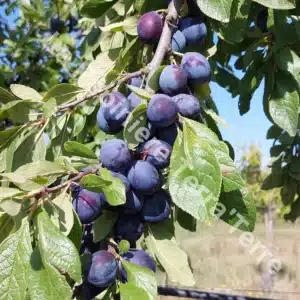
The Datil Plum stands out for its perfect balance between sweet and tangy. Bigger than a mirabelle plum but smaller than a Reine-Claude, it offers:
- Taste: Dense yellow flesh, rich in sugar with a slight refreshing acidity
- Culture: Fast and regular fruiting, excellent disease resistance
- Harvest: Mid-August, with a generous and regular production
- Use: Versatile – Excellent in table fruit, jam and pastry
Nurseryman’s advice: Ideal for starting out in organic thanks to its natural hardiness.
2. Reine-Claude Dorée: Gustatory excellence
The Golden Queen, often considered the best plum on the table, offers an incomparable taste experience:
- Taste: Exceptionally sweet and fragrant flesh, fine and melting texture
- Culture: Requires a pollinator, slightly susceptible to disease
- Harvest: Mid-August, generous but alternating production
- Use: Excellent in fresh fruit and jam
Nurseryman’s advice: Combine it with a Reine-Claude d’Oullins to optimize pollination.
3. Mirabelle Plum of Nancy: The Lorraine Tradition
The Mirabelle plum of Nancy is a historic variety that excels in organic cultivation:
- Taste: Very sweet golden berries with a characteristic honey scent
- Culture: Self-fertile, excellent hardiness, suitable for cold climates
- Harvest: End of August, abundant production
- Use: Versatile – Perfect for pies, jams and brandy
Nurseryman’s advice: Excellent strain for regions with harsh climates.
4. Plum from Alsace: The Authentic Tradition
The Quetsche d’Alsace is the reference for pies and prunes:
- Taste: Firm, not very juicy flesh, characteristic sweet and tangy flavour
- Culture: Self-fertile, very hardy, excellent cold hardiness
- Harvest: Early September, regular production
- Use: Ideal for baking and drying
Nurseryman’s advice: Prefer a sunny exposure to optimize the sugar concentration.
5. Prune d’Ente: The Queen of Prunes
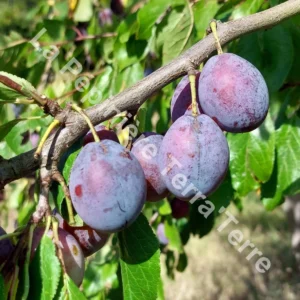
The Prune d’Ente, famous for the prunes of Agen, is distinguished by:
- Taste: Very sweet, fragrant flesh, with an exceptional sugar level
- Culture: Vigorous and hardy, good resistance to diseases
- Harvest: Late August-early September
- Use: Perfect for prunes and processing
Nurseryman’s advice: Thinning the fruits promotes their size and taste quality.
6. Golden Japan: Organic Exotic
The Golden Japan Plum tree brings a touch of originality to the orchard:
- Taste: Golden yellow flesh, very juicy, sweet and fragrant flavour
- Culture: Medium vigour, requires cross-pollination
- Harvest: Mid-July to early August
- Use: Excellent in fresh fruit and compote
Nurseryman’s advice: Plant it with another Japanese variety to ensure pollination.
7. The All-Rounder
The Stanley Plum is appreciated for its versatility:
- Taste: Firm and sweet flesh, balanced flavour
- Culture: Self-fertile, highly productive, good disease resistance
- Harvest: Mid-September
- Use: Versatile – Excellent in fresh, drying and baking
Nurseryman’s advice: Ideal for beginners thanks to its ease of cultivation.
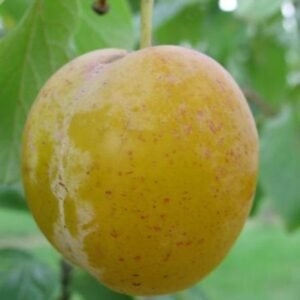
8. Reine-Claude d’Oullins: The Generous Precocious
The Reine-Claude d’Oullins is renowned for her precocity:
- Taste: Yellow-green flesh, juicy and sweet, slightly acidic
- Cultivation: Self-fertile, excellent pollinator, resistant to moniliosis
- Harvest: Late July-early August
- Use: Perfect for fresh fruit and pastries
Nurseryman’s advice: Excellent choice to open the season of the Reine-Claudes.
9. Reine-Claude de Bavay: The Late Refined
The Reine-Claude de Bavay extends the season with elegance:
- Taste: Fine, very sweet flesh, with a delicate fragrance
- Culture: Good hardiness, not very sensitive to monilia
- Harvest: Late August-early September
- Use: Excellent in fresh fruit and processing
Nurseryman’s advice: Thin the fruit to avoid alternating production.
10. Coe’s Golden Drop: The Golden Jewel
The Goutte d’Or plum closes our selection with its exceptional qualities:
- Taste: Very sweet, fragrant and juicy golden flesh
- Culture: Medium vigour, requires pollinator
- Harvest: Mid-September
- Use: Ideal as a table fruit and jam
Nurseryman’s advice: Consume quickly after harvest to enjoy its optimal aroma.
Comparison Table of the 10 Best Strains
Harvest Period
| Self-fertile | harvest | variety |
|---|---|---|
| Datil | Mid-August | Yes |
| Reine-Claude Dorée | Mid-August | No |
| Mirabelle plum from Nancy End of | August | Yes |
| Alsace plum | September | Yes |
| Prune d’Ente End of | August | No |
| Golden Japan | Mid-July | No |
| Stanley | Mid-September | Yes |
| Reine-Claude d’Oullins End of | July | Yes |
| Reine-Claude de Bavay | Early September | No |
| Goutte d’Or | Mid-September | No |
Resistance and Use
| Variety | Resistance | Main Use |
|---|---|---|
| Date | ★★★★★ | Versatile |
| Reine-Claude Dorée | ★★★☆☆ | Table |
| Mirabelle plum from Nancy | ★★★★☆ | Pastry |
| Alsace plum | ★★★★★ | Pâtisserie |
| Prune d’Ente | ★★★★☆ | Prunes |
| Golden Japan | ★★★★☆ | Table |
| Stanley | ★★★★★ | Versatile |
| Reine-Claude d’Oullins | ★★★★☆ | Table |
| Reine-Claude de Bavay | ★★★★☆ | Table/Canned |
| Golden | ★★★ Drop☆☆ | Table |
Selection Guide for Your Organic Orchard
- For a small garden: Choose self-fertile varieties such as Datil or Stanley
- For a spread harvest: Combine Reine-Claude d’Oullins (early) and Reine-Claude de Bavay (late)
- For cold regions: Opt for the Quetsche d’Alsace or the Mirabelle plum from Nancy
- For beginners: Choose hardy varieties like Stanley or Datil
Complete Guide to the Culinary Uses of Organic Plums
Organic plums, rich in natural flavours, offer an exceptional taste palette for the kitchen. Each variety in our organic plum collection has its own culinary characteristics.
Fresh Plums
Best Strains for Fresh Consumption:
- Reine-Claude Dorée : Melting flesh, very sweet, incomparable fragrance
- Plum Datil : Perfect balance of sugar and acidity
- Golden Japan : Crunchy texture, exotic flavour
Storage Instructions:
- Ideal temperature: 4-6°C
- Optimal humidity: 85-90%
- Maximum duration: 2-3 weeks depending on the variety
Jams and Jellies
Organic Plum Jam
Recipe Ingredients:
- 1 kg of organic plums
- 750g of sugar
- 1 organic lemon
Recommended varieties:
- Reine-Claude de Bavay : Perfect texture, intense taste
- Mirabelle plum of Nancy : Delicate fragrance, golden jam
Pastry and Desserts
Applications in Pastry:
- Pies:
- Plum d’Alsace – Ideal for the Alsatian tart
- Mirabelle de Nancy – Perfect for tartlets
- Clafoutis: All Reine-Claudes
- Cakes: Firm varieties such as Stanley
Preparation Tips:
- Pitting: Easier with slightly firm fruit
- Cooking: Monitor the water content of the fruit
- Storage: Plum desserts freeze well
Drying and Prunes
Guide to Drying Organic Plums
Best Varieties for Drying:
- Prune d’Ente: The reference for Stanley prunes
- : Excellent sugar content
Drying Process:
- Optimum temperature: 65-70°C
- Average duration: 24-36 hours
- Storage: Up to 1 year in a dry place
Practical tips
- Choose organic fruit for its intensified natural flavours
- Adapt the variety to the intended use
- Respect seasonality for fruit at its best quality
- Store excess in freezers or jars
Complete Guide: Diseases and Pests of Organic Plum Trees
In organic farming, prevention is the key to a healthy orchard. Our experience as specialized organic nurserymen allows us to share best practices to keep your plum trees healthy.
Main fungal diseases
Moniliosis: The Major Threat
Symptoms:
- Brown rot on the fruits
- Drying of the flowers and twigs
- Mummified fruits remaining on the tree
Organic prevention:
- Regular pruning to aerate the tree
- Systematic elimination of mummified fruits
- Resistant varieties such as the Reine-Claude de Bavay
Natural Treatment:
- Horsetail manure as a preventive
- Calcined kaolinite clay
Rust: Risk to the Foliage
Symptoms:
- Orange spots under the leaves Early
- defoliation
- Weakening of the tree
Organic prevention:
- Promote air circulation
- Avoid excess nitrogen
- Collect dead leaves
Main pests
Codling Moth: The Pest of Fruit
Identification:
- Small worms in fruit
- Entrance holes with sawdust
- Early fruit drop
Biological Solutions:
- Pheromone traps
- Corrugated cardboard strips
- Trichogramma releases
Aphids: Monitoring Necessary
Impact:
- Deformation of the leaves
- Honeydew and sooty mold
- Weakening of young shoots
Natural control:
- Favor beneficial insects (ladybirds, hoverflies)
- Diluted black soap
- Nettle or fern manure
Preventive strategies in organic farming
Essential actions:
- Variety choice: Favor hardy varieties such as the Datil Plum
- Planting: Respect distances for good ventilation
- Size: Maintain an airy and balanced structure
- Biodiversity: Installing hedges and companion plants
Organic Care Calendar
| Season | Preventive Actions | |
|---|---|---|
| Monitoring Winter | Pruning, Cleaning, Winter Treatment | GeneralHealth |
| Status Spring | Floral Protection, Natural Stimulation | Moniliosis, Aphids |
| Summer | Thinning, | Monitoring Codling Moth, Rust |
| Autumn | Cleaning, Strengthening | Post-Harvest Status |
Authorized biological treatments
- Plant manure (nettle, horsetail, fern)
- Clay (calcined kaolinite)
- Sulphur and copper (limited doses)
- Bacillus thuringiensis (against caterpillars)
Note: Even in organic farming, only use treatments as a last resort. Prevention remains the best protection.
Organic Plum Cultivation: A Complete Practical Guide
The organic cultivation of plum trees requires a global and reasoned approach. Our experience as a specialized organic nursery allows us to share best practices for the success of your natural orchard.
Planting and Establishment
Soil Preparation
- Ideal soil type: Well drained, slightly calcareous
- Optimal pH: Between 6.5 and 7.5
- Recommended natural amendments:
- Mature compost (3-5 kg/m²)
- Bone meal for phosphorus
- Wood ash for potassium
Planting Tips
- Optimal period: November to March frost-free
- Planting distance:
- Between trees: 5-6 metres
- Between rows: 6-7 metres
- Orientation: North-South to optimise sunlight
For detailed tips on planting, check out our How to Plant a Fruit Tree guide.
Biological Maintenance
Size and Training
- Training Size: The first 3 years
- Maintenance pruning: Annual in winter
- Green pruning: Summer to aerate the tree
Discover our detailed techniques in our size guide.
Natural Fertilization
| Period | Type of Intake | Quantity |
|---|---|---|
| Autumn | Mature compost | 3-5 kg/tree |
| Spring | Nettle manure | Dilution 1/10 |
| Summer | BRF | 5cm thick |
Organic Water Management
- Watering young trees: Regular for the first 2 years
- Mature tree: In periods of drought only
- Water-saving techniques:
- Organic mulching
- Drip irrigation
- Watering basin
Aromatic
Beneficial
- Plants: Lavender, Thyme, Rosemary (natural repellents)
- Flowers: Marigold, chamomile (attract pollinators)
- Ground cover: White clover (nitrogen fixation)
Organic Harvesting and Conservation
Harvesting Tips
- Ripeness Indicators:
- Characteristic colour of the variety
- Fruit slightly supple to the touch
- Intact pruine Picking
- method:
- Pick with the stem
- Handle gently
- Avoid hot hours
- Short-term (1-2 weeks) Natural Storage Methods:
- Cool and ventilated room
- Temperature: 4-6°C
- Humidity: 85-90%
- Processing:
- Natural drying
- Jams without preservatives
- Freezing
- Cool and ventilated room
- Temperature: 4-6°C
- Humidity: 85-90%
- Natural drying
- Jams without preservatives
- Freezing
Organic certification
Conversion to organic requires:
- 3 years of transition
- Compliance with organic specifications
- Regular checks
- Documentation of practices
Keys to Success in Organic
- Regular Observation of the Orchard
- Anticipation of Problems
- Maintenance of Biodiversity
- Patience and Perseverance