Description
All about the Prunier Saint Jean
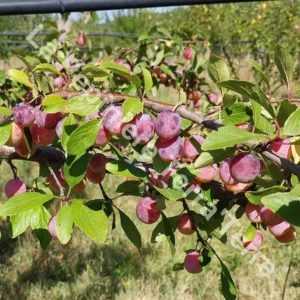
The Saint Jean Plum tree is an emblematic heritage variety from the Landes and Lot-et-Garonne (40/47). Its name refers to the period of its harvest, which traditionally coincides with St. John’s Day (June 24). This plum tree stands out for its exceptional earliness, being among the first plums to ripen in the season. The Saint Jean plum is part of a population of old varieties with several forms: green, white, red and Saint-Pierre (the latest).
Characteristics of the Saint Jean Plum Tree
The Saint Jean Plum tree is a tree of moderate vigour, making it a suitable choice for small family gardens and orchards. The fruits are small to medium and characteristic oval in shape. Their colour is orange-golden with sometimes greenish reflections depending on the sub-variety.
The flesh is yellow, melting and not very juicy. Its taste is particularly remarkable: very sweet without any acidity, it offers a mild and fragrant flavor that makes it a plum appreciated for fresh consumption. The pit is free, easily detached from the flesh at full maturity.
Cultivation and maintenance
The Saint John Plum tree is weakly self-fertile, which means that it will be able to produce some fruit in the absence of other plum trees, but its production will be significantly improved by the presence of other early-flowering varieties. It adapts to most soils, even calcareous soils, but prefers well-drained soils.
Its very early flowering (March) makes it a little sensitive to late frosts, but its hardiness generally allows it to produce even in variable climatic conditions. To optimize its production, it is recommended to combine it with other varieties of early-flowering plum trees such as the Golden Japan Plum or the Golden Queen Claude Plum.
Culinary Uses
The Saint Jean plum is versatile in the kitchen. Its melting and very sweet flesh makes it a delicious fruit to be enjoyed plain. It is also appreciated for making compotes and jams where its natural sweetness reduces the addition of sugar. Its exceptional earliness will allow you to enjoy the first plums from mid-June, well before most other varieties.
History and heritage
Cultivated since the eighteenth century in the South-West of France, particularly in the Lot-et-Garonne and the Landes, the Saint Jean plum represents an important element of the regional fruit heritage. This hardy variety has historically been propagated by seeding or rejection, which explains the genetic diversity that can be observed today in this plum population.
By choosing to plant a Saint Jean Plum tree in your garden, you are contributing to the preservation of a traditional variety and you are treating yourself to the pleasure of tasting one of the earliest and sweetest plums of the French fruit heritage.
Our other Plum Trees