Description
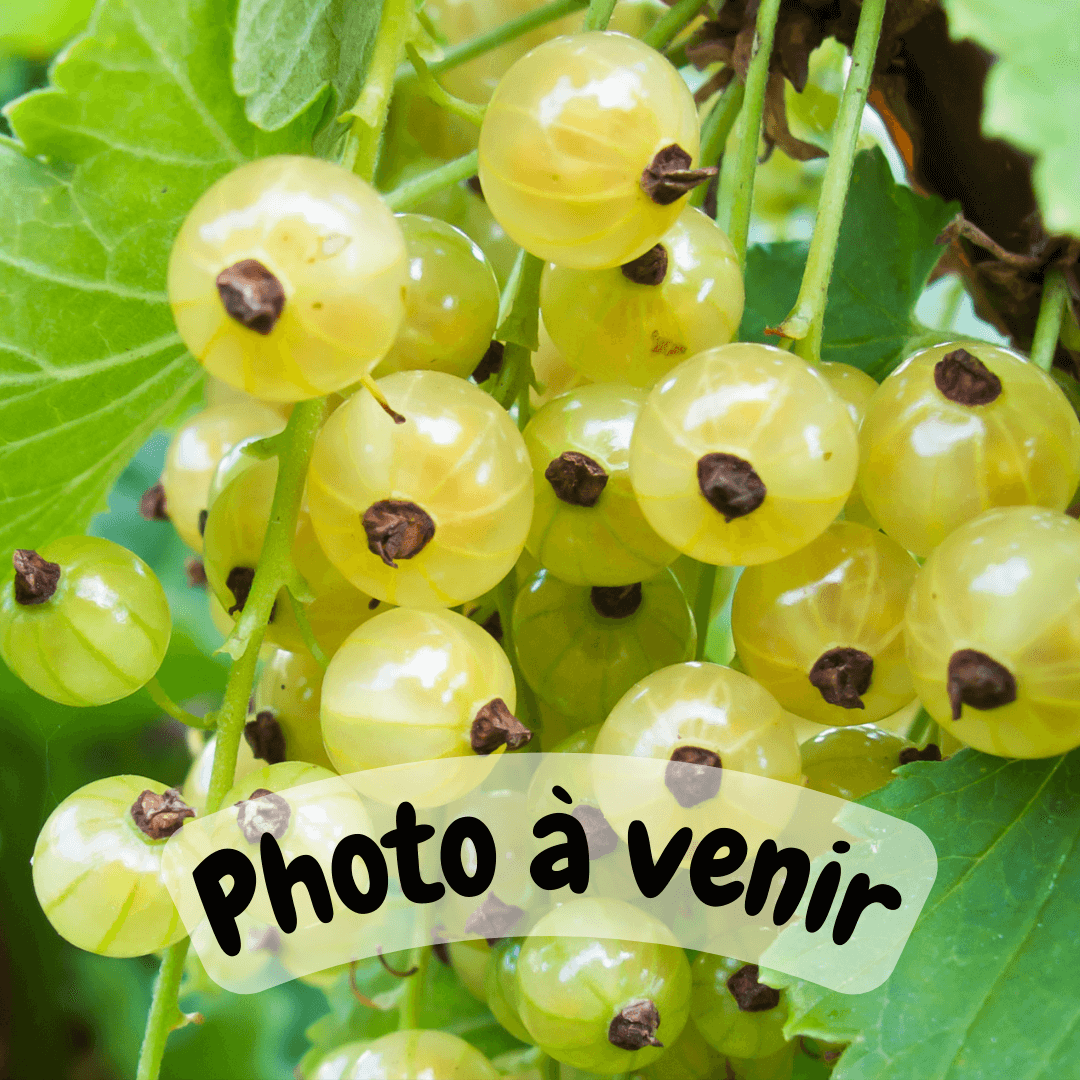
White Versailles currant – Ribes rubrum ‘Versailles Blanche’
The white Versailles currant is a vigorous and self-fertile old variety, producing long clusters of translucent white berries. Its fruits, with a diameter of 6 mm, offer a juicy, sweet and fruity pulp with a slight acidity. This variety is appreciated for its resistance to diseases and its generous production.
Technical characteristics
- Botanical Name: Ribes rubrum ‘Versailles Blanche’
- Family: Grossulariaceae
- Origin: Horticultural, obtained around 1840
- Height at maturity : 1 to 1.50 m
- Width at maturity : 1 m
- Type of foliage: Deciduous, green
- Hardiness: Up to -23.5°C (USDA Zone 6a)
Cultivation and maintenance
Planting
- Planting period: October to March (ideally February, October to November)
- Exhibition: Non-direct or partial shade
- Soil: Ordinary, well-drained, even poor, without too much limescale
- Planting distance: 1 m between each plant
Care
The white Versailles currant is easy to grow and requires little maintenance. Here are some tips to optimize your growth and production:
- Regular watering, especially in times of drought
- Addition of organic fertilizer at the start of vegetation
- Pruning in February: keep 10-12 main branches, shorten their length by 1/3
- Mulching the base to limit weed development
Harvesting and Use
White Versailles currants are harvested from mid-July to the end of August. These versatile fruits can be used in a variety of ways:
- Fresh consumption
- Preparation of jellies and jams
- Production of coulis and sorbets
- Filling for pies and pastries
- Manufacture of wines and syrups
Nutritional benefits
White Versailles currants are naturally rich in nutrients that are beneficial to health:
- Vitamin C: excellent antioxidant
- Fibre: promotes digestion
- Minerals: potassium, calcium, magnesium and iron
- Pectin: helps regulate cholesterol levels
Our offer
- Packaging: Clump of 1 to 3 bare root branches
- Price: €6 per unit
- Availability: December to March
Why choose the white Versaillesaise currant?
- An old variety known for its sweet and fruity flavour
- Generous and regular production
- Natural resistance to diseases
- Easy to grow, ideal for beginner gardeners
- Versatile in the kitchen: desserts, jams, syrups
- Interesting nutritional contribution
Our other Currants
Our Advice Blog
Our advice in video