Description
Cox Orange Apple Tree (Malus domestica ‘Cox’s Orange Pippin’)
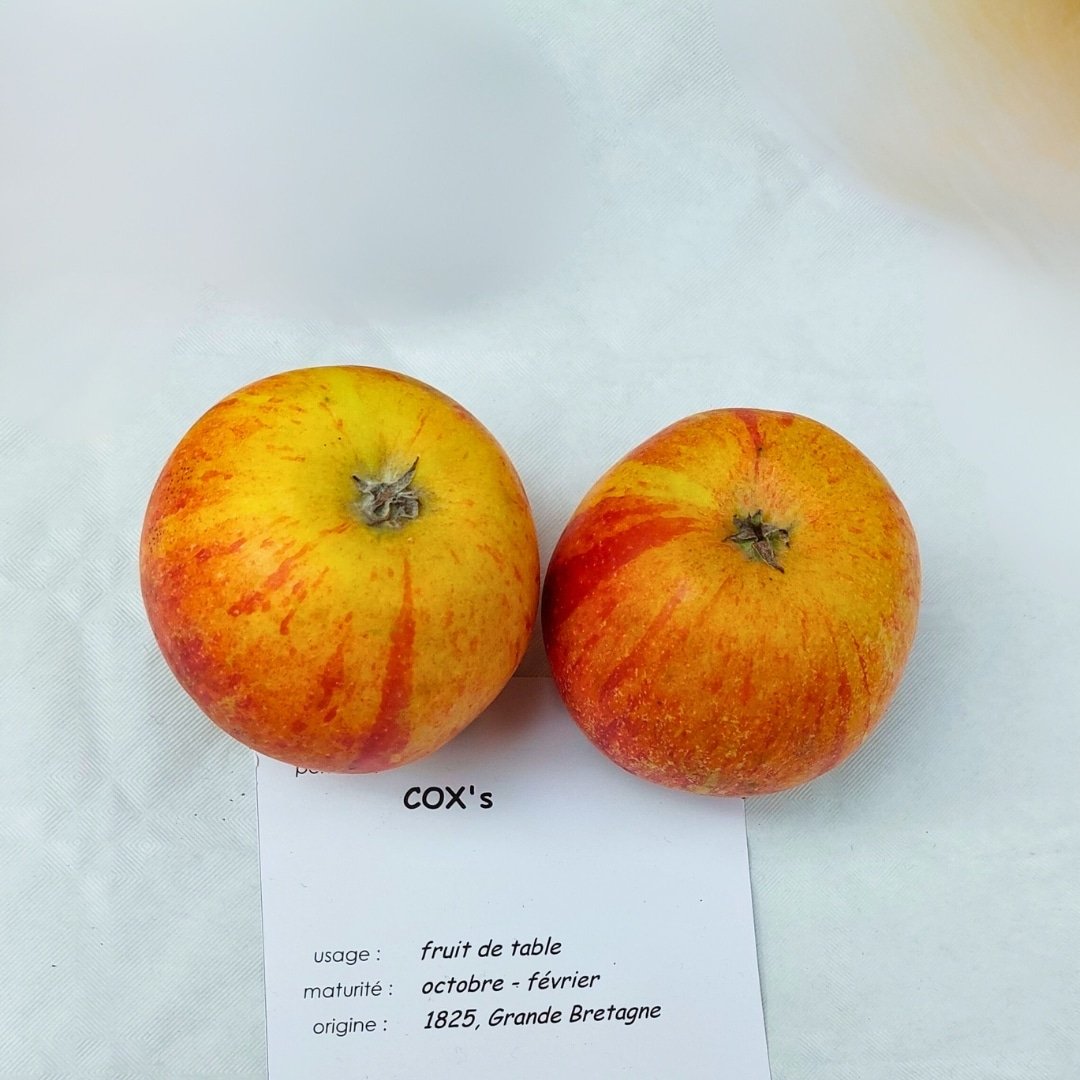
The Cox Orange apple tree, or Cox’s Orange Pippin, is an old variety renowned for its exceptional taste qualities. Discovered in 1825 by Richard Cox in England, this variety produces medium-sized fruits with crisp, melting yellow flesh. The apples are slightly tart, very sweet and fragrant, offering a taste experience similar to that of pear.
Characteristics of the fruit
- Size: Medium
- Colour: Orange-yellow with red streaks
- Flesh: Yellow, crunchy and melting
- Flavour: Slightly tart, very sweet, fragrant
- Storage: From September to January in good conditions
Culture
Exhibition
The Cox Orange apple tree requires a sunny exposure and a location sheltered from the wind for optimal fruiting.
Soil
It adapts to different types of soil, but prefers cool, well-drained soil. It tolerates slightly calcareous or acidic soils.
Pollination
This variety is self-sterile and requires the presence of other varieties for good pollination. The recommended pollinators are: Golden Delicious, Reine des Reinettes, and Cabarette.
Hardiness
Very hardy, resistant to -25°C.
Care
Size
Perform maintenance pruning in late winter to maintain a balanced, airy shape. For trellised forms, prune green in summer. Check out our guide to pruning fruit trees for more details.
Fertilization
Provide organic matter (compost, potting soil) and a bottom fertilizer such as crushed horn when planting. An annual addition of compost at the foot of the tree will promote its growth and production.
Plant protection
Cox Orange may be susceptible to powdery mildew and scab. Favour preventive control methods such as planting diversified hedges and installing nesting boxes to attract beneficial insects. In the event of an attack, preventive treatments based on horsetail decoction or Bordeaux mixture can be effective.
Uses
Cox’s Orange apples are excellent for fresh consumption thanks to their exceptional flavor. They are also well suited to baking, especially for making pies, compotes or other desserts.
Our planting tips
- Choose a sunny and wind-sheltered location in your garden.
- Dig a planting hole three times wider than the root ball of the tree.
- Mix the planting soil with compost or quality potting soil.
- Plant the tree, being careful not to bury the graft point.
- Water thoroughly after planting and install a stake if necessary.
- Mulch the base of the tree to conserve moisture and limit weed competition.
For more information on planting fruit trees, check out our guide to planting fruit trees.
Complementary varieties
To diversify your orchard and ensure good pollination, you can also consider other varieties of apple trees such as:
Also discover our selection of the best varieties of apples to help you in your choice.
Our Advice Blog
Our advice in video