

And for those who want to know more:
 Nijisseiki
Nijisseiki, also known as the “20th Century pear”, stands out for its sweet yellow flesh. It ripens towards the end of August and is famous for its perfect balance of sweetness and freshness, with a slight hint of acidity.
Shinseiki offers a refreshing taste experience with its green-yellow skin and moderately sweet flesh. Ripening around mid-August, it is also valued as an effective pollinizer. Self-fertile, it is one of the best known in France.
Hosui is known for its juicy flesh and exceptional flavour. This variety ripens in early September and can be harvested right through to December. Its juicy texture and unique taste win over nashi lovers.
Shinko prefers warm climates; in its element it becomes very productive. It bears excellent large, round fruit.
Ya Li is a large fruit from a vigorous, productive tree. This variety is self-sterile, so it needs other varieties nearby for pollination (Tsu Li is used to pollinate it).
Kimizuka Wase is picked early in the season: in Japanese, wase means “early”. It ripens in August and is very pleasant and refreshing to bite into under the blazing August sun.
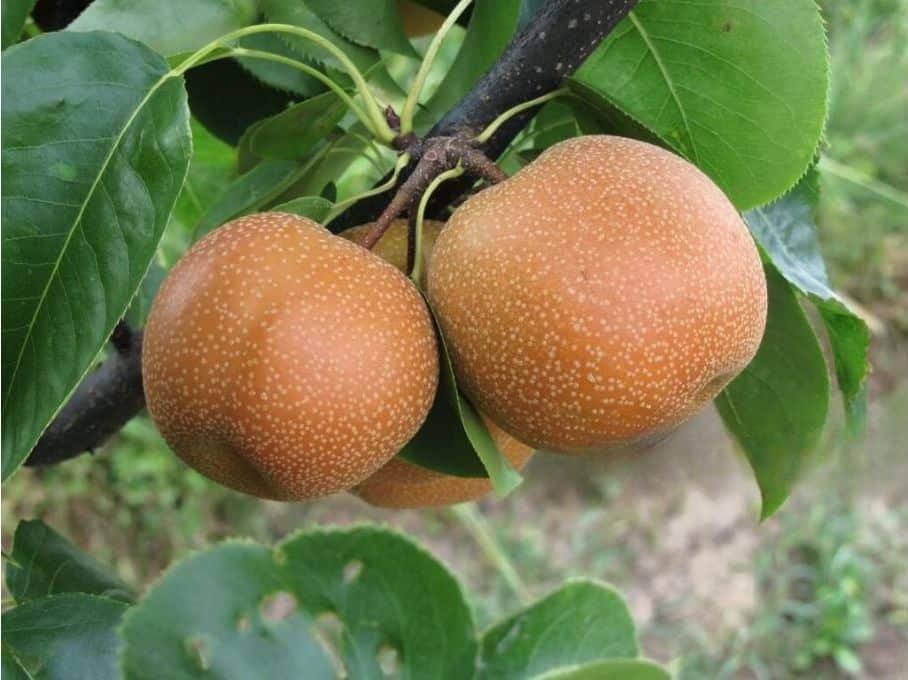
Chojuro ripens from late August to early September and stands out for its golden skin and sweet flesh. This variety is often chosen for its rich flavour and pleasant aroma. It is round, with bronze-coloured skin.
Niitaka bears large fruit of very good quality, which places it among the best. Mild and subtly sweet, it offers a perfect balance of sweetness and freshness.
The fruit of Kosui is round and medium to large, with thin, rough, bronze-coloured skin. The flesh is white, crisp, juicy and very sweet, with a delicate scent of rosewater.
Growing this tree takes some attention to ensure good growth and fruiting. For optimal development, these trees prefer free-draining soil and a position in full sun. Planting is best done in late autumn or early winter. As for care, regular, appropriate watering is crucial, especially during dry spells.
Generally speaking, this pear tree is not difficult to grow. It suffers from no particular disease and has few pests. This makes the nashi an ideal tree for beginners (as is the pear tree). It is usually grafted onto Pyrus (pear seedling rootstock).
Pruning is also an important part of care, to be done during the dormant season to remove dead or badly placed branches and to open up the tree. This fruit tree can be trained as a central leader to bring it into cropping sooner; to find out more about this formative pruning, read our article “Central leader training“.
By following this advice, you can look forward to an abundant harvest of excellent fruit.
With its many varieties, the nashi offers a rich and varied world of flavours. Much loved in Japan and China, this tree grows very well in our climate. From the specific needs of each type to their nutritional benefits, the different ways of eating them and the best picking and storage techniques, it proves to be a fruit that is as delicious as it is good for health. Whether for fruit lovers, keen gardeners or food lovers looking for new flavours, it brings a unique, exotic touch to the range of fruit available. Its richness in vitamins, crisp texture and versatility in the kitchen make it an excellent choice for a healthy, tasty diet.
Often called the Asian pear, it combines a crisp, juicy texture with a mild, refreshing flavour. Its flesh is firmer than that of traditional pears and less grainy. In the mouth, nashi offers a subtle sweetness with light notes of rose and melon, which makes it popular for its freshness and unique taste.
It thrives in regions with a temperate climate and plenty of sun. For optimal growth, plant it in free-draining, slightly acidic to neutral soil. Choose a spot that gets at least six hours of direct sun a day. Nashi can tolerate low temperatures, but it is best protected from late spring frosts, which can damage the blossom and reduce the crop.
A ripe fruit yields slightly to gentle pressure, like a ripe peach. The colour can vary from green to yellow depending on the variety, but slight yellowing is often a sign of ripeness. The fruit’s aroma also becomes stronger as it ripens. If it gives off a floral, fruity scent when you smell it near the stalk, it is probably ready to eat.
It is rich in fibre, vitamin C and potassium, which makes it an excellent choice for a balanced diet. Fibre helps regulate the digestive system, while vitamin C boosts the immune system. Potassium contributes to cardiovascular health by helping to regulate blood pressure. And with its high water content, it is hydrating and can help keep skin healthy and radiant.