Description
Romulus Vine
The Romulus vine is a seedless white table grape originating from Geneva (New York State, USA), introduced in 1952 by the New York State Agricultural Experiment Station. It is known for its large bunches of very sweet golden-yellow berries and for hardiness superior to that of European seedless grapes.
The Romulus grape comes from the Ontario × Sultana (Thompson Seedless) cross made in 1928, as part of the breeding programme led by A. B. Stout. Like its sisters Interlaken, Himrod and Lakemont, Romulus is named after a locality in the Finger Lakes, the wine region around Geneva.
Identity sheet of the Romulus vine
| Criterion |
Value |
Details |
| Species |
Interspecific hybrid Vitis labrusca × Vitis vinifera |
Often wrongly sold as Vitis vinifera |
| Synonyms |
Romulus Seedless, NY 15291 |
NY 15291 = selection number at Geneva |
| Origin |
Geneva, New York State (USA) |
Station now part of Cornell AgriTech |
| Parents |
Ontario × Sultana (Thompson Seedless) |
Cross made in 1928 |
| Introduction |
1952 |
Breeding programme led by A. B. Stout |
| Fruit colour |
White, yellow-green to golden yellow |
Golden at full ripeness |
| Seeds |
Seedless (apyrenic) |
Soft seed remnants possible |
| Flowering |
May-June |
Hermaphrodite flowers |
| Pollination |
Self-fertile |
A single plant is enough |
| Harvest |
Late season, at the time of Concord |
September in France |
| Storage |
Good in a fruit store and in the cold |
Berries that drop when overripe |
| Use |
Table grape |
Also juice and raisins |
| Vigor |
Strong |
Crop load to be managed |
| Hardiness |
Moderate |
Clearly superior to Sultana |
| Rootstocks offered |
Choose on this page |
How to choose your rootstock |
About the Romulus vine
The Romulus vine grew out of a project launched in 1919 between the New York Botanical Garden and the Geneva station. The aim was to create seedless grapes hardy enough for the northeastern United States, where the European Sultana freezes.
The 1928 Ontario × Sultana cross proved the most successful of the programme. It produced Interlaken Seedless (1947), then Himrod and Romulus (1952), and later Lakemont. The Romulus vine is the latest of this sibling group: Interlaken ripens in late August at Geneva, Himrod a few days later, and Romulus only at the time of Concord.
Fruit characteristics
- Bunches: large, conical to cylindrical, winged and compact.
- Berries: small to medium, round, seedless.
- Skin: thin and tender, yellow-green turning golden yellow at full ripeness.
- Flesh: firm, juicy and very sweet.
- Aroma: light fruity aroma reminiscent of strawberry, sometimes discreetly “foxy”.
In American trials comparing seedless grapes, Romulus was among the varieties with the highest soluble sugar content. The Romulus grape owes its seedlessness to Sultana: the flower is fertilised, then the seed aborts early, which can leave small soft remnants in the berry.
Pollination of the Romulus vine
The Romulus vine is self-fertile: its hermaphrodite flowers pollinate themselves and a single isolated plant produces fruit. No pollinizer is needed. A second variety is useful only to spread the harvest, for example with the Jupiter vine, an earlier seedless grape with a muscat flavor.
Cultivation and care
Soil and exposure
The Romulus vine needs a full-sun exposure and a well-drained soil, even a poor one. A south-facing wall, an arbour or a well-lit trellis helps this late-season variety ripen. Soils waterlogged in winter should be avoided.
Planting
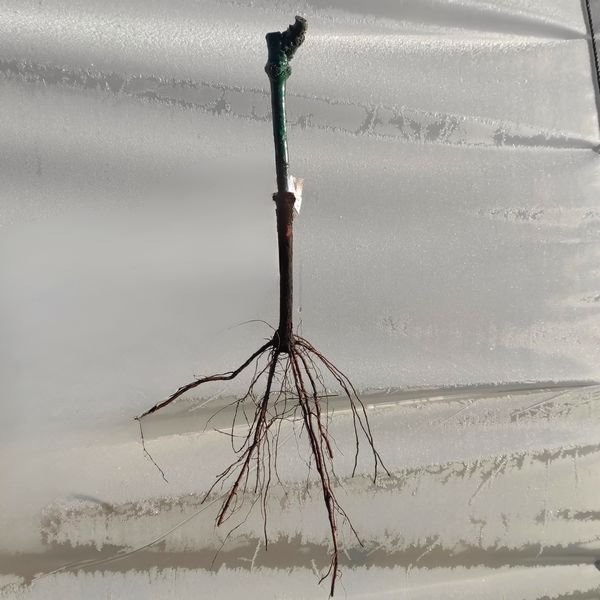
- Plant from November to March, outside frost periods, in soil that is no longer waterlogged.
- For a grafted plant, keep the graft union above soil level.
- Provide a sturdy support from planting: the Romulus vine is vigorous.
Pruning
The Romulus vine is pruned in winter, on dry wood. Like the Sultana it descends from, Romulus benefits from long pruning (Guyot or canes), which keeps buds farther from the base. The main rule is to limit the crop load: at Geneva, the winter hardiness of the Romulus sibling group depended on avoiding excessive crops. Removing a few bunches in summer also improves sugar and berry quality.
Diseases and resistance
- Downy and powdery mildew: medium to good tolerance, without immunity. Its hybrid origin makes Romulus less susceptible than a pure European vine.
- Grey mould (botrytis): the compact bunches ventilate poorly in wet weather. Light leaf removal around the bunches limits the risk.
- Birds and wasps: the thin, sweet skin attracts pests late in the season. A net or bunch bags protect the harvest.
Culinary uses
The Romulus grape is eaten first and foremost fresh, as a table grape. Its small seedless berries are popular with children and suit fruit salads, cheese platters and desserts. In the United States, Romulus is also used for grape juice and raisins. For another white table grape to harvest earlier, the Palatina vine, a white grape with a slight muscat note rounds out the season nicely.
Hybrid or Vitis vinifera: what Romulus really is
Many nurseries sell the Romulus vine as Vitis vinifera. This is incorrect: through its mother Ontario, an American variety, Romulus carries genes of Vitis labrusca. It is an interspecific hybrid, like the other Geneva seedless grapes.
This hybrid status explains the strengths of the Romulus vine: hardiness clearly superior to Sultana and lower susceptibility to fungal diseases. It also explains the slightly “foxy” aromatic note that some tasters perceive. Another practical consequence: the variety, introduced in 1952, is not covered by a plant variety certificate. Listings that present it as a “new selection” are off by seventy years.
To compare with another seedless white grape suited to gardens, see the Rosemary vine, an easy-to-manage seedless white grape. For a resistant grape to harvest early, see the Lidi vine, an early Hungarian variety.
Frequently asked questions about the Romulus vine
What is the Romulus vine?
The Romulus vine is a seedless white table grape created in the United States at the Geneva agricultural experiment station (New York) and introduced in 1952. It descends from the Ontario × Sultana cross. Romulus produces large, compact bunches of small, sweet golden-yellow berries that ripen late in the season. It is a hybrid, hardier in the cold than Sultana.
What is the best seedless table grape?
There is no best seedless grape in absolute terms: the choice depends on the climate and the desired harvest period. The Romulus vine suits gardeners who want a very sweet white grape late in the season. To spread the harvest, it is paired with an earlier variety, such as Jupiter, with its muscat flavor.
What is a grape without seeds called?
A grape without seeds is described as “apyrenic”. The best known is Sultana, sold in the United States as Thompson Seedless. The Romulus vine inherited its seedlessness from it. In these varieties, the flower is fertilised and then the seed aborts, which can leave small soft remnants in the berry.
Is the Romulus vine self-fertile?
Yes, the Romulus vine is self-fertile: its hermaphrodite flowers pollinate themselves and a single isolated plant produces fruit. The absence of seeds does not come from a pollination failure, since fertilisation does take place before the seed aborts. A second plant is useful only to spread the harvest or vary the flavors.
When to harvest the Romulus grape?
The Romulus grape is harvested late in the season. At Geneva, its station of origin, it ripens at the time of Concord, after Interlaken and Himrod. In France, nurserymen place the harvest in September. Pick when the berries are golden yellow and distinctly sweet, without waiting for overripeness, when the berries drop.
Is the Romulus vine resistant to diseases?
The Romulus vine shows medium to good tolerance to downy and powdery mildew, but not immunity. Its hybrid origin makes it less susceptible than a pure European vine. Its compact bunches can nevertheless suffer from grey mould in wet weather: ventilating the bunches and limiting the crop load reduces the risk.
Our other vines
Our advice in video