
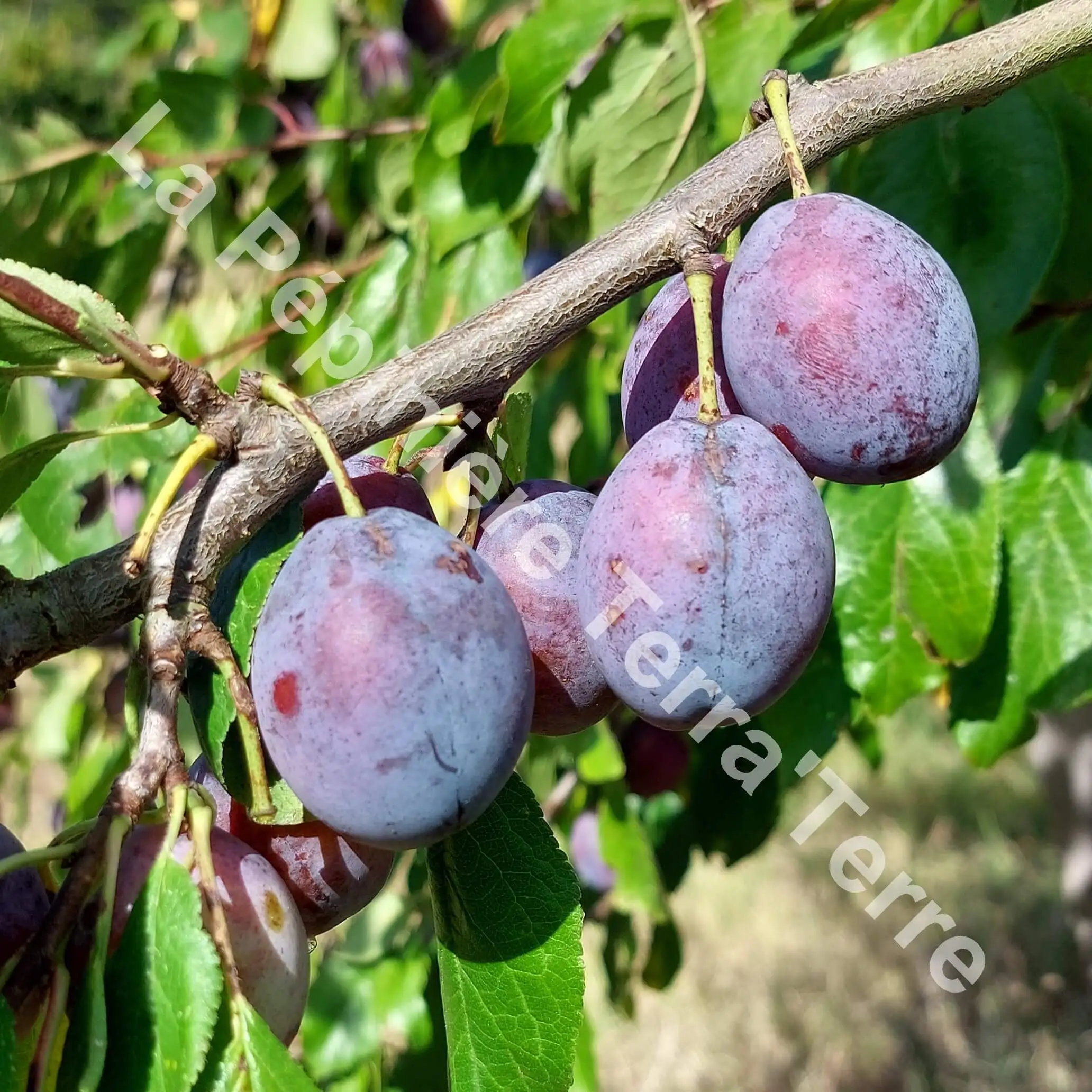
The Prune d’Ente, a jewel of France’s farming heritage, is much more than just a fruit. Native to South-West France, this distinctive variety of Prunus domestica is the product of a long tradition and the mainstay of the famous Agen prunes (Pruneaux d’Agen). The Prune d’Ente plum tree, a robust and generous tree, embodies the perfect alliance of history, farming know-how and French gastronomy. From its distant origins to its current status as a source of regional pride, it tells a story rich in age-old traditions and agricultural innovation, making it an essential symbol of our terroir.
The history of the Prune d’Ente plum tree (Prunus domestica) is a fascinating journey through the centuries. Originating in the Middle East, it was introduced into France at the time of the Crusades, marking the start of a remarkable fruit-growing saga.
12th century: Crusaders bring back plum trees from the East, enriching the diversity of fruit plants in Europe.
13th century: the monastery of Clairac, in Lot-et-Garonne, becomes the cradle of Prune d’Ente growing, where the monks experiment with different types of pruning to optimise production.
15th century: drying techniques develop, giving rise to the first prunes, an innovative product for the time.
17th century: cultivation spreads throughout South-West France, with growers refining pruning and root-management techniques.
19th century: the prune industry takes off, making the Prune d’Ente a pillar of the regional economy.
20th century: growing techniques are modernised, including new pruning methods, and the “Pruneaux d’Agen” PGI is obtained.
This remarkable evolution has turned a simple variety into a symbol of French farming excellence. Today, the plum tree remains a living witness to our heritage, carrying on an age-old tradition while adapting to the modern requirements oforganic farming.
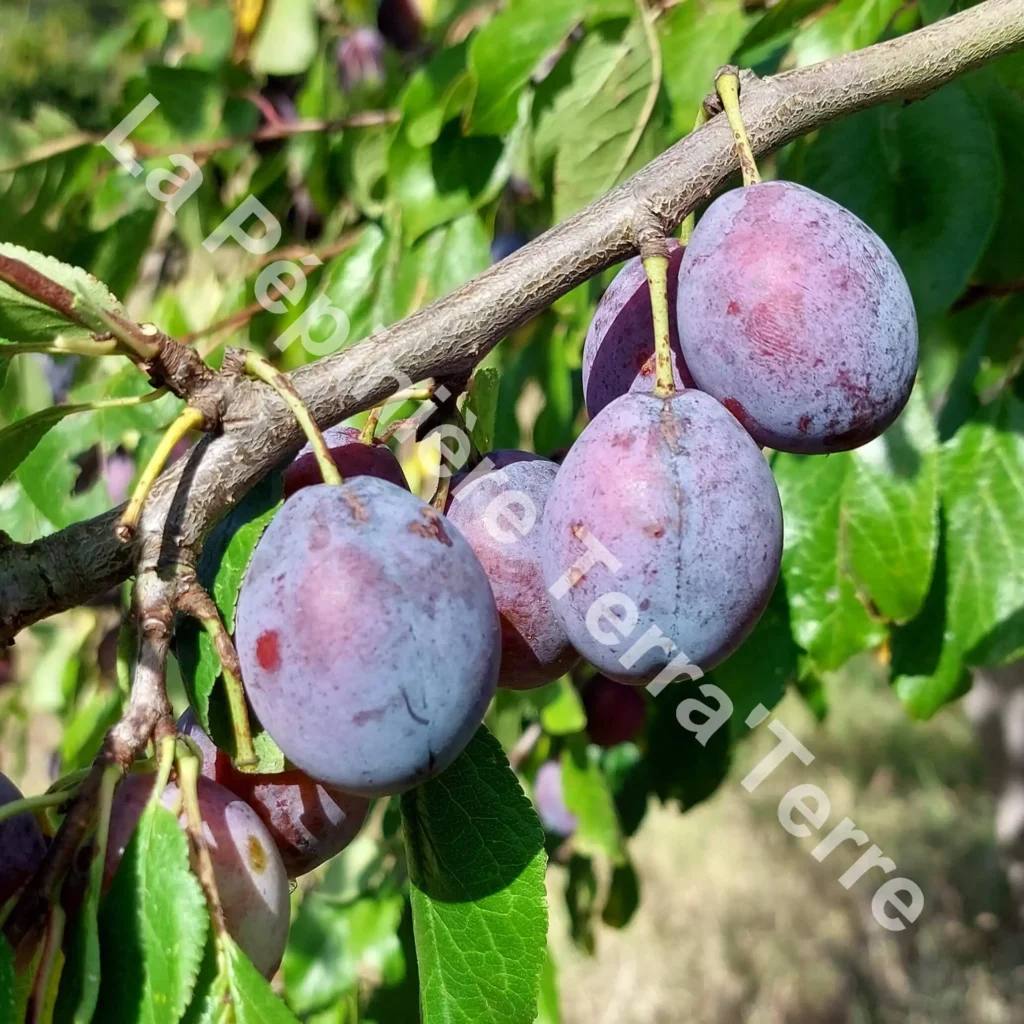
This fruit stands out from other varieties thanks to very specific characteristics that make it an exceptional product:
These distinctive characteristics make the fruit very versatile, prized both for eating fresh and for processing, and renowned for its exceptional quality.
Growing the Prune d’Ente plum tree requires care and know-how to obtain quality fruit. Here is a practical guide to successfully planting and caring for this iconic fruit tree:
By following this advice, you will give your plum tree the best chance to thrive and produce flavourful fruit, whether for eating fresh or for making prunes. For more details on planting, particularly bare-root trees, see our complete guide to planting fruit trees.
Turning the fruit into Agen prunes is a craft process that preserves the fruit’s nutritional and taste qualities. Perfected over the centuries, the method is now protected by a Protected Geographical Indication (PGI), which guarantees the authenticity and quality of the final product.
This meticulous process turns the fresh fruit into a flavourful, nutritious prune. Drying concentrates the sugars and nutrients, creating an exceptional dried product recognised worldwide for its quality and incomparable taste. The “Pruneaux d’Agen” PGI guarantees not only the geographical origin but also compliance with traditional production methods, assuring consumers of an authentic, high-quality product.
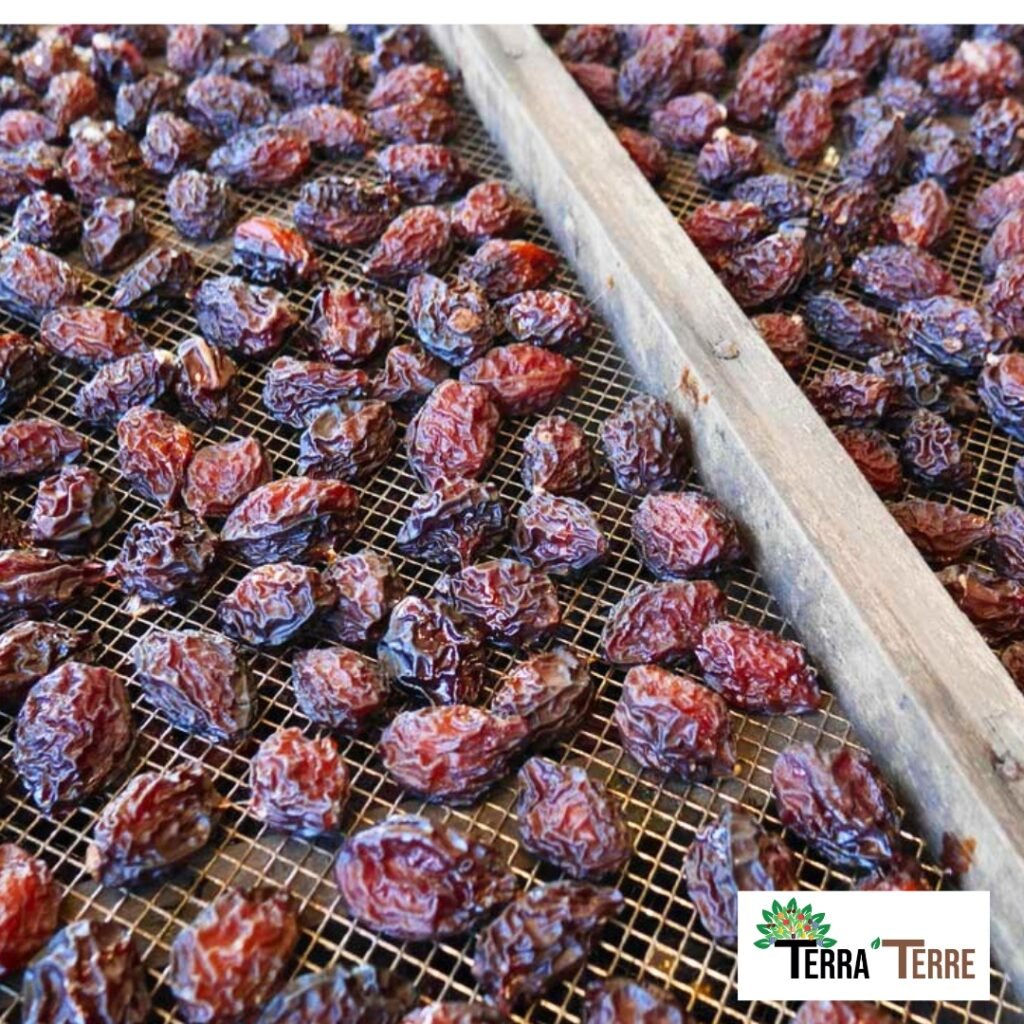
The fruit and its dried form are real nutritional treasures. Rich in fibre, antioxidants, vitamins and minerals, they offer many health benefits. Here is an overview of their nutritional qualities:
| Nutrient | Fresh fruit (100 g) | Agen prune (100 g) | Benefits |
|---|---|---|---|
| Fibre | 1.4 g | 7.1 g | Aids digestion, regulates transit |
| Potassium | 157 mg | 732 mg | Supports heart function |
| Vitamin K | 6.4 μg | 59.5 μg | Essential for blood clotting |
| Antioxidants | High | Very high | Fights oxidative stress, anti-ageing |
| Vitamin B6 | 0.029 mg | 0.205 mg | Supports the nervous system |
| Iron | 0.17 mg | 0.93 mg | Helps form red blood cells |
These nutrients make them valuable allies for a balanced diet. They contribute to digestive, cardiovascular and bone health while providing natural energy. Including these fruits in your diet can therefore benefit your general well-being.
The Prune d’Ente and the Agen prune are versatile ingredients that fit beautifully into a wide range of dishes, from starters to desserts. Here are some tasty ideas for using them in the kitchen:
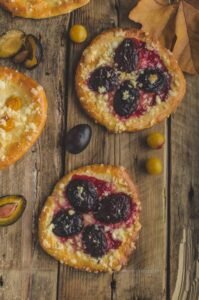
A delicious tart that shows off its unique flavour:
Preparation time: 20 min
Cooking time: 40 min
Serves: 6
Fresh or dried, this fruit brings a touch of sweetness and character to your dishes. Feel free to experiment and combine it with other seasonal fruit to create original, flavourful dishes.
Growing the Prune d’Ente and producing Agen prunes play a crucial role in the economy of South-West France, particularly in Lot-et-Garonne. Rooted in tradition, this industry is a major economic pillar of the region.
The impact of the sector goes far beyond fruit production. It supports many jobs in the region, from growing to processing, packaging and marketing. It also contributes significantly to the region’s cultural and culinary identity, attracting tourists and showcasing the local terroir.
Despite its strength, the sector faces significant challenges:
To meet these challenges, the sector is focusing on innovation, quality and product diversification. Organic production is a priority, as shown by our range of organic fruit trees, meeting growing consumer demand for more natural, environmentally friendly products. This includes optimising pruning techniques and selecting disease-resistant varieties.
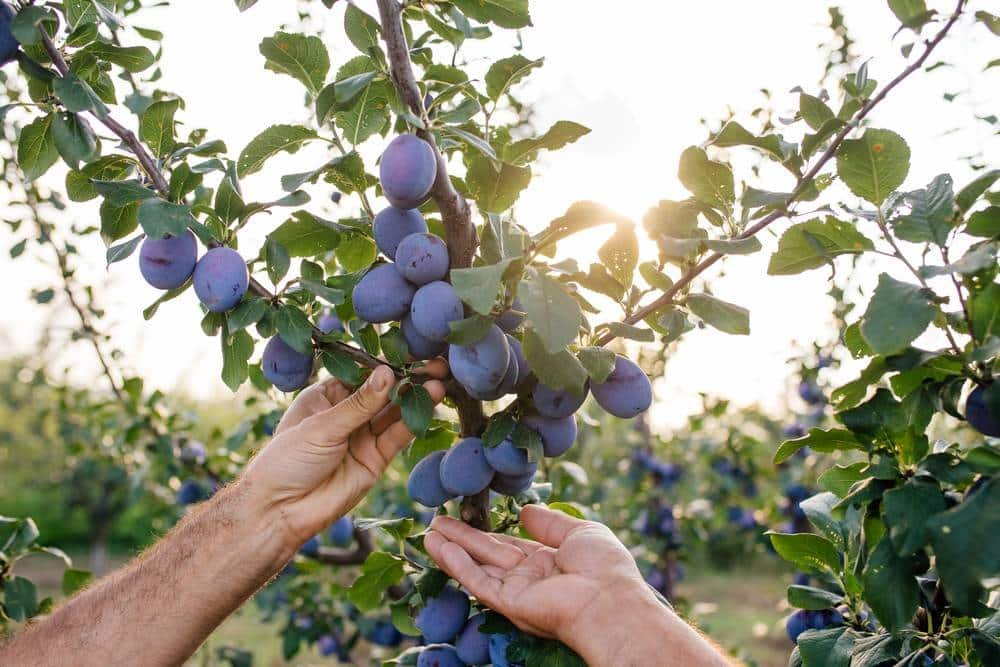
Although the Prune d’Ente is famous for its distinctive qualities, it is interesting to compare it with other popular varieties of the genus Prunus. This comparison highlights the distinctive characteristics of each variety and helps explain why it is so prized for making prunes.
| Characteristic | Prune d’Ente (Prunus domestica) | Mirabelle (Prunus domestica subsp. syriaca) | Reine-Claude (Prunus domestica) | Quetsche (Prunus domestica subsp. domestica) |
|---|---|---|---|---|
| Shape | Elongated oval | Round, small | Round | Oval |
| Colour | Dark purple | Golden yellow | Green to yellow | Purplish blue |
| Taste | Sweet, slightly tangy | Very sweet, fragrant | Sweet, juicy | Tangy, fragrant |
| Main use | Prunes, eating fresh | Tarts, jams | Eating fresh | Tarts, fruit brandy |
| Sugar content | High | Medium | High | Medium |
| Suitability for drying | Excellent | Medium | Poor | Good |
| Harvest period | Late August – early September | August | July – August | September |
| Pollinizer | Good pollinizer | Excellent pollinizer | Needs a pollinizer | Good pollinizer |
| Foliage | Dense, dark green | Fine, light green | Broad, glossy green | Medium, matt green |
| Flowering | White, abundant | White, early | White, late | White, mid-season |
This comparison illustrates the diversity of plums and highlights the qualities of each variety. The Prune d’Ente stands out in particular for its suitability for drying and its high sugar content, which make it the ideal variety for prunes. To discover other interesting varieties, see our selection of the best plum varieties.
This fruit is much more than a simple agricultural product. It embodies a unique cultural and culinary heritage deeply rooted in the terroir of South-West France. Facing the challenges of the 21st century, the Prune d’Ente sector stands at an exciting crossroads between tradition and innovation.
Its future rests on several promising lines of development:
Help shape the future of the Prune d’Ente! By choosing to plant a Prune d’Ente plum tree in your garden, you help preserve this living heritage. Not only will you enjoy delicious fruit, but you will also help keep an age-old tradition alive. Whether you choose bare-root or container-grown trees, every plum tree planted is a step towards preserving this exceptional variety.
This exceptional fruit will no doubt continue to delight our taste buds and enrich our culinary heritage for generations to come. Its future looks as flavourful as its history is rich, promising new discoveries and innovations while remaining true to its deep roots in the French terroir.